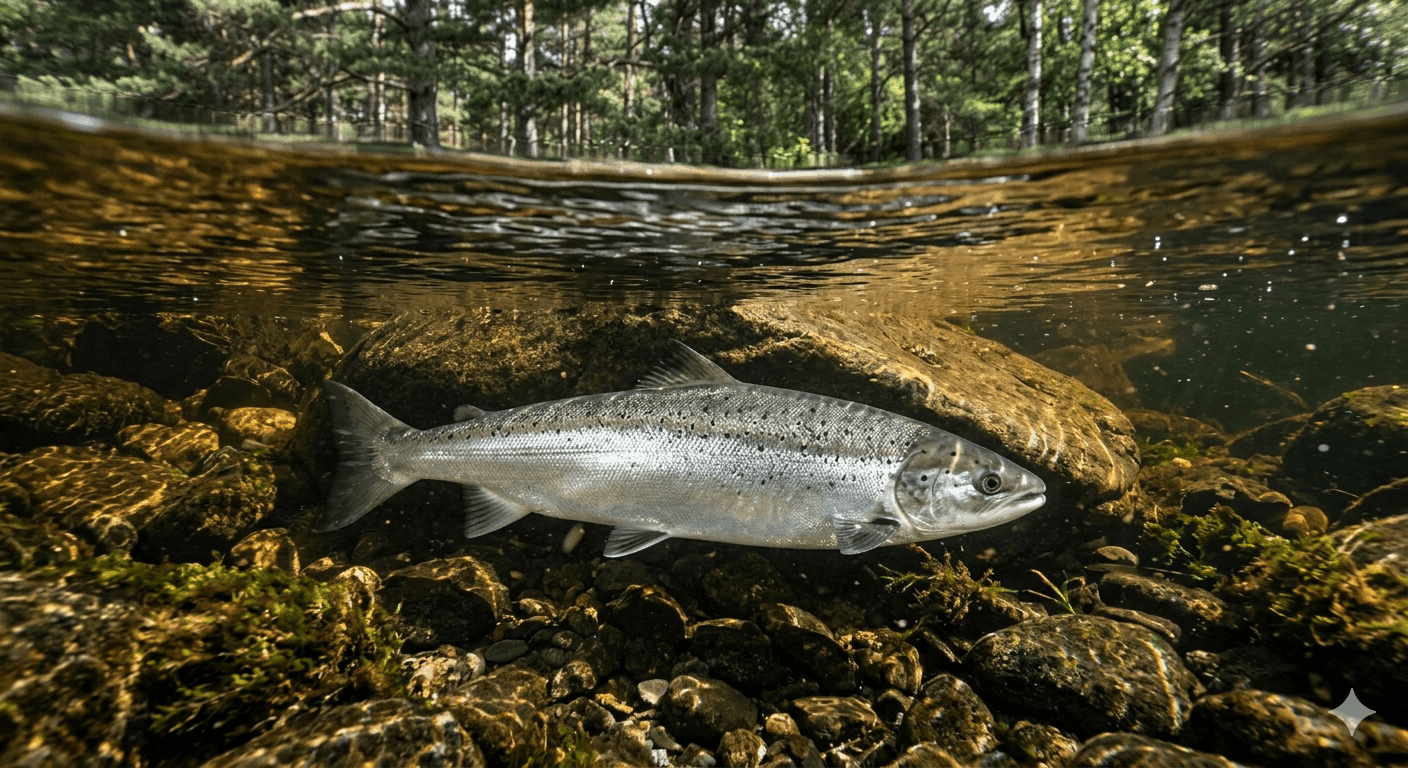
Atlantic Salmon
Salmo salar
The king of rivers — a powerful anadromous fish that returns from the ocean to spawn in its birth river.
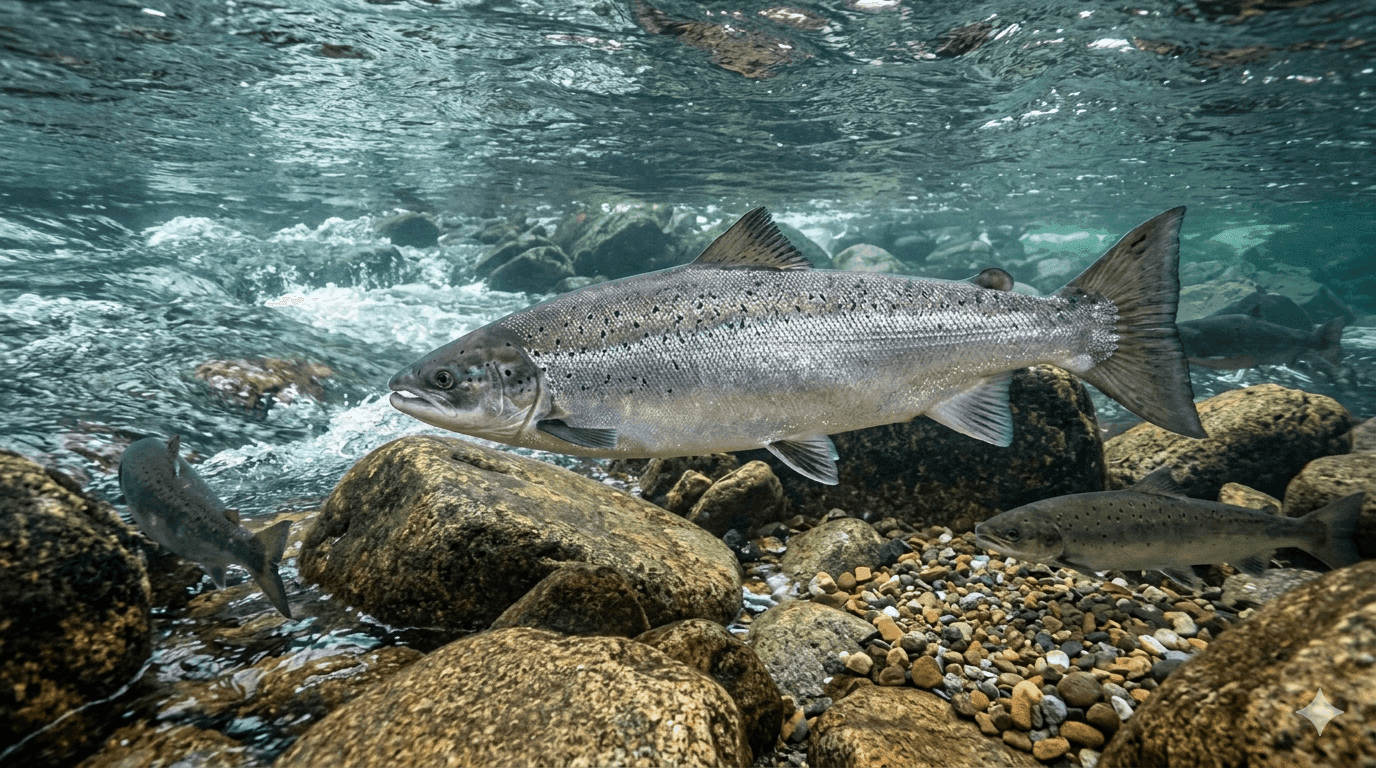
Large, fast-flowing rivers with clean, cool water and gravel spawning beds. Adults spend years at sea before returning to spawn.
60–120 cm, typically 3–8 kg; multi-sea-winter fish can exceed 20 kg. Scottish Tay regularly produces fish over 15 kg.
Salmo salar
Rivers flowing into the North Atlantic — Norway, Iceland, Russia, Scotland, Ireland, England, Wales, France, Spain. Norwegian rivers like the Gaula, Laerdal, and Alta are world-renowned.
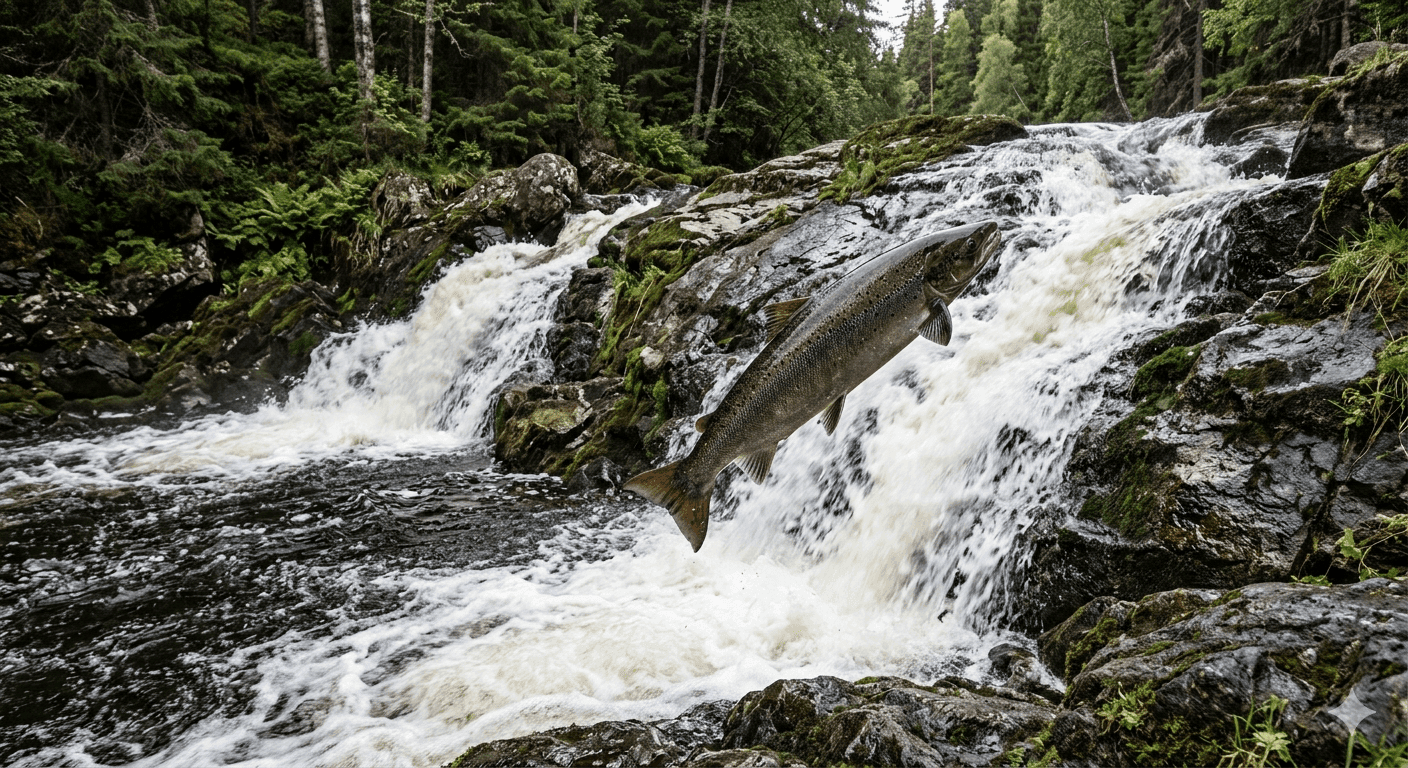
The Atlantic salmon is the pinnacle of European riverine fly fishing. Entering fresh water from the sea with no intention of feeding, it must be provoked or irritated into taking a fly through predatory instinct, territorial aggression, or remembered habit. This paradox — fishing for a creature that does not need to eat — is what makes salmon fishing simultaneously maddening and addictive.
Salmon runs historically occurred in most rivers from Portugal to Siberia. Today the population is concentrated in Norway, Iceland, Russia's Kola Peninsula, Scotland, and Ireland — representing some of the purest wild game fishing experiences available in Europe.
The salmon angler's skills are tested differently than the trout angler's. Reading the river to find holding lies — where salmon rest during their upstream journey — is paramount. Presentation must be precise. The take is often subtle: a slow head-and-tail rise or a firm pull, depending on water temperature.
Musėlinės žūklės taktika
Fly Selection by Water Temperature
Water temperature dictates everything in salmon fishing. Cold water below 8 °C calls for large, heavy tube flies or size 2–6 doubles fished deep and slow. As temperatures rise toward 15 °C, switch progressively to smaller, lighter flies (size 8–12) fished nearer the surface. Above 18 °C, floating lines with small hitched or surface flies often perform best.
Swing and Across
The traditional spey-casting technique: cast across and slightly downstream, let the fly swing through the arc on a tight line, stepping downstream between casts to cover the pool systematically. The swing creates lifelike movement. Long two-handed rods (12–15 ft) excel on large Scandinavian and Scottish rivers.
Riffling Hitch
Popular in Iceland and low summer water conditions. A half-hitch knot behind the fly head makes it skate and cut a V-wake across the surface. Salmon that ignore conventional swung flies will sometimes chase and attack a skated surface fly with spectacular aggression.
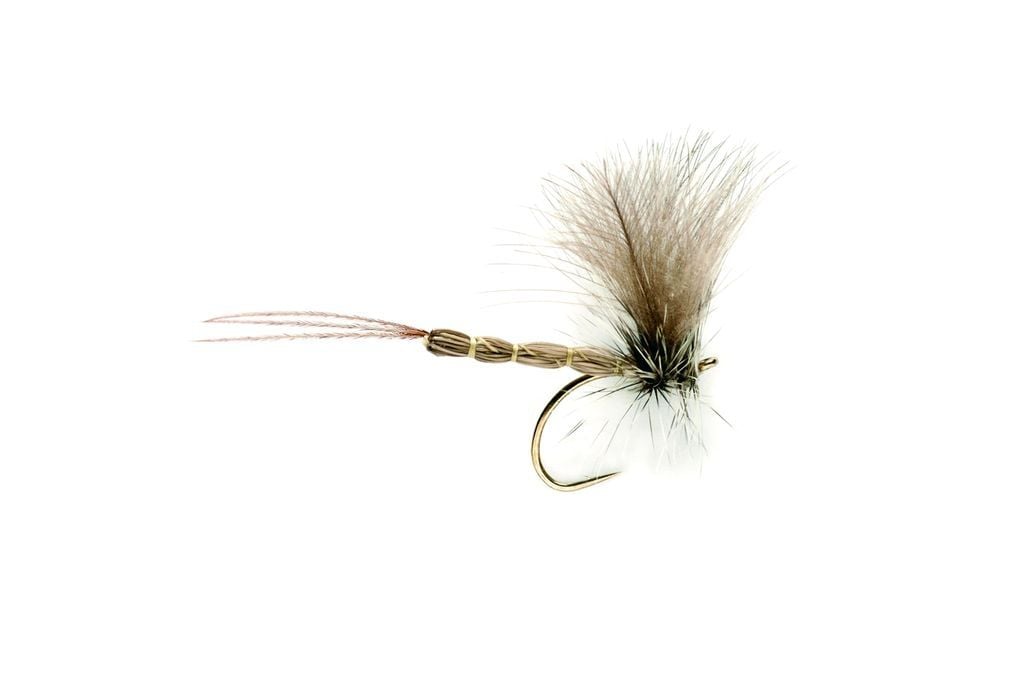
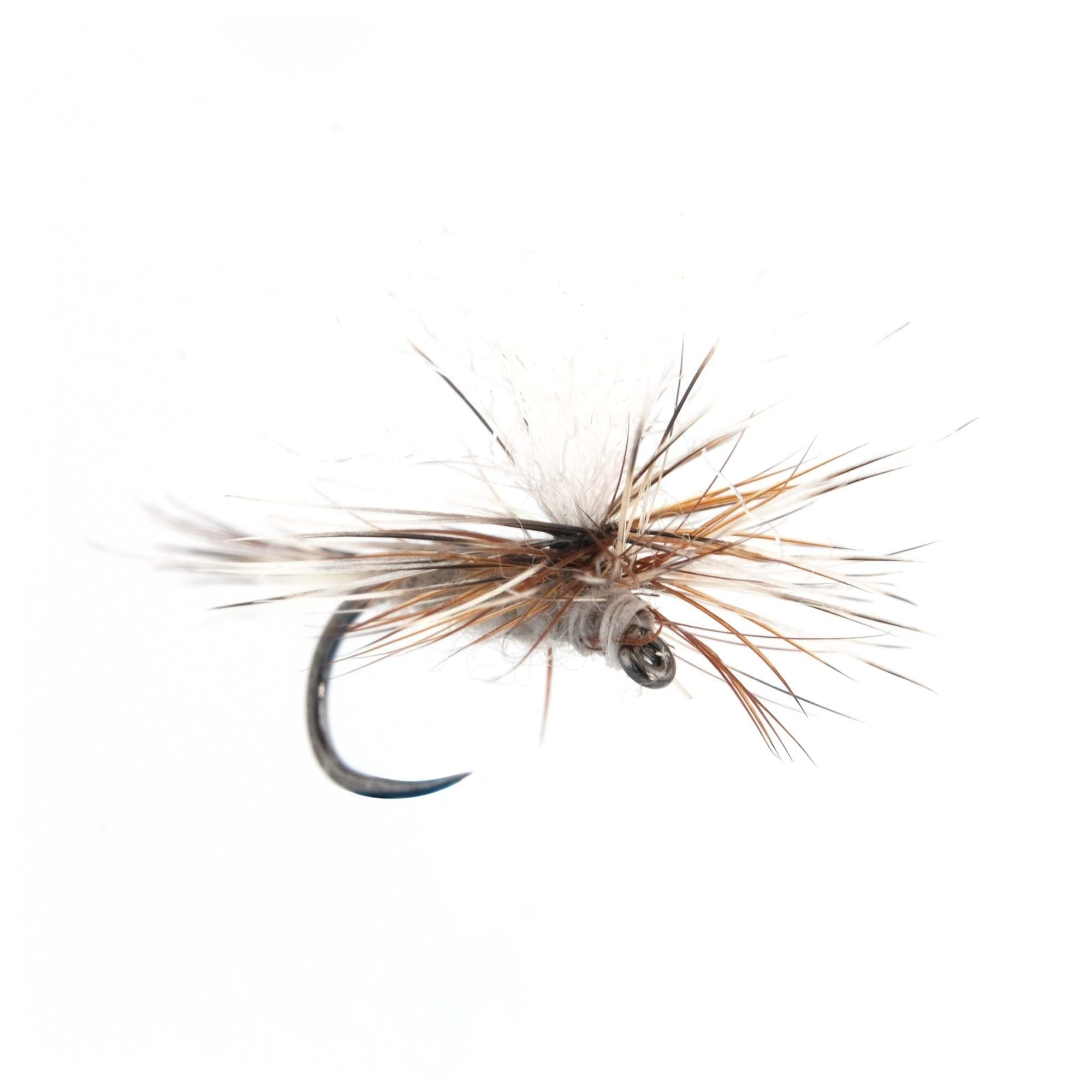
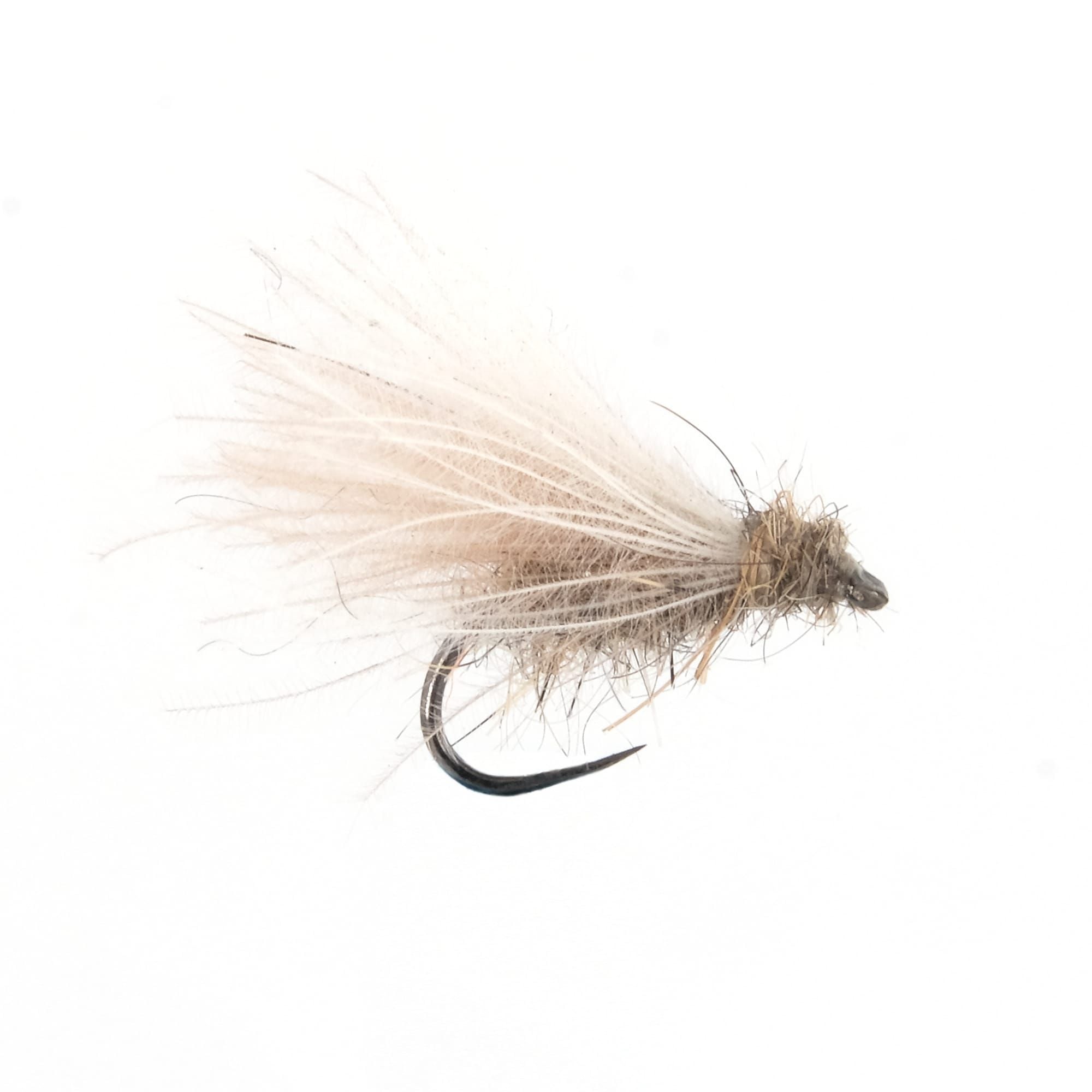
Rekomenduojamos musės
Geriausi mėnesiai
Kur žvejoti
Svarbiausi postai

Kitos rūšys
Brown Trout
Salmo truttaThe most iconic freshwater fish in European fly fishing — wary, selective, and endlessly fascinating.
Grayling
Thymallus thymallusCalled the "Lady of the Stream" — the grayling extends the fly fishing season deep into winter with year-round sport.
Sea Trout
Salmo trutta truttaThe sea-run form of brown trout — a nocturnal predator that enters rivers silver-bright and fights with extraordinary power.
Rainbow Trout
Oncorhynchus mykissIntroduced from North America, the rainbow now thrives across Europe and offers acrobatic sport in rivers, lakes, and reservoirs.
Arctic Char
Salvelinus alpinusA relic from the last Ice Age — the arctic char inhabits the coldest and deepest lakes of Northern Europe and offers pure wilderness fly fishing.