Large Stonefly
Perla bipunctata — Salmon Fly, Large Perlid, Stone Creeper
A formidable aquatic predator nymph and one of the largest insects in fast, rocky European rivers — its emergence signals exciting fishing on upland streams.
Stoneflies — Plecoptera
Perlidae
Nymph 25–35 mm, Adult 20–25 mm / Hook size 8–10
Early morning (crawls to bank to emerge)
Fast, rocky, well-oxygenated upland rivers and streams — Welsh, Scottish, Scandinavian spate rivers
Lifecycle
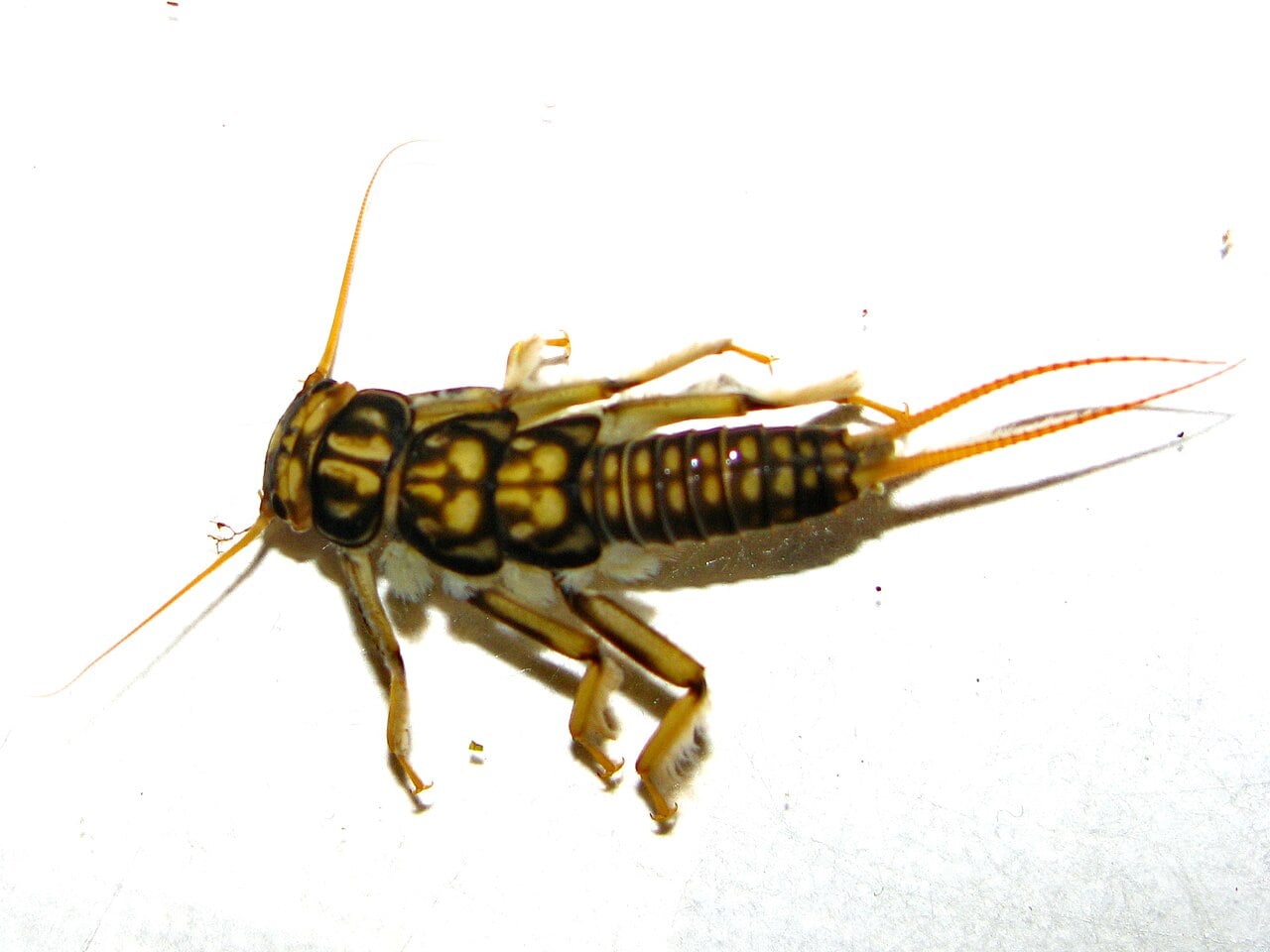
The Large Stonefly (Perla bipunctata) has one of the longest larval periods of any European freshwater insect — up to three years in the cold, nutrient-poor upland rivers it inhabits. The nymph is a formidable creature: heavily built, up to 35 mm in length, dark brown to near-black, with strong clinging legs and fiercely predatory behaviour. It feeds on other invertebrates, midge larvae, and smaller mayfly nymphs throughout its multi-year development.
Unlike most aquatic insects, stoneflies do not hatch in the water. When the nymph is ready to emerge, it crawls out of the water onto exposed rocks, bridge pilings, or bankside stones and vegetation — typically in the pre-dawn hours. The adult emerges from the nymphal shuck on dry stone, expands its wings, and may remain near the water for days before mating.
This terrestrial emergence means stonefly adults that are blown or fall back onto the water are windfall food items rather than a predictable surface hatch. However, the large swimming nymphs migrating toward the bank in the hour before emergence provide excellent sub-surface fishing, and dead stonefly nymphs drifting after emergence are significant food sources in their own right.
Peak months
The Large Stonefly occupies a different ecological and angling niche to mayflies and caddisflies. It does not create the classic surface hatch-and-rise cycle; instead, it provides exceptional nymph fishing in the weeks before and during emergence, and occasional large dry fly opportunities when adults are blown back to the water.
In the spate rivers of Wales, Scotland, Northern England, and Scandinavia — fast-running, rocky, acidic systems running off moorland — the Large Stonefly and its relatives are among the dominant invertebrates, sometimes forming the most significant biomass in the food chain. Large brown trout in these rivers have evolved to specifically target large nymphs, and presentations that match the Perla nymph's size and movement can produce exceptional fish.
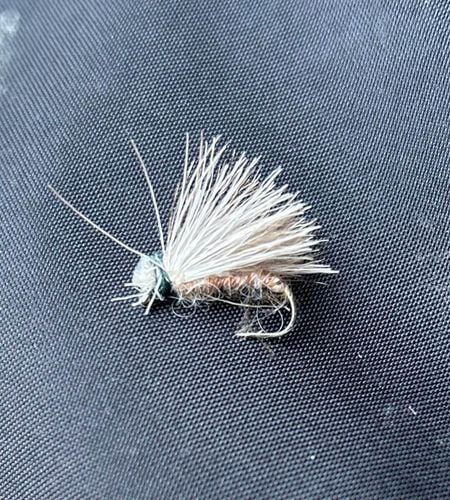
The large adult stonefly dry fly technique — borrowed from American "Salmonfly" fishing on western rivers — is less developed in Europe but valid on warm June days when numbers of adults are in bankside vegetation. A size 8–10 large brown-orange dry fly cast tight to the bank where adults roost can provoke some of the most aggressive reactions of the season from large wild brown trout.
Fishing tips
Large Nymph Dead Drift
A substantial, heavily weighted stonefly nymph pattern (size 8–10, with tungsten bead) fished on a tight-line nymphing rig in the deep runs and pockets of fast upland rivers is the most productive approach. The nymph should be barely clearing the bottom, touching stones occasionally. Takes from large trout are typically firm and confident.
Bankside Presentation
During emergence (April–June mornings), cast a large adult stone fly dry fly tight to the bank — within 15 cm — where nymphs are crawling out. Position your fly against the vertical bank face on the downstream swing, and allow it to hang in the current. Large trout station themselves close to the bank to intercept migrating nymphs.
Swinging Wet Fly
A large, dark soft hackle wet fly or Perla Spider on a size 8–10 hook, swung across rocky pockets on a downstream angle, is a traditional and effective technique for upland stream brown trout during stonefly season. The swinging fly replicates the natural's cross-current movement toward the bank.
Fly patterns
Shop Our Flies
Other hatches
MayfliesGreen Drake
Ephemera danicaThe iconic mayfly of British chalk streams — its annual emergence signals the most celebrated fortnight in fly fishing.
MayfliesBlue Winged Olive
Serratella ignitaThe most important small olive on British and European chalk streams — reliable, widespread, and technically demanding.
MayfliesMarch Brown
Rhithrogena germanicaThe first major hatch of the European fly fishing season — a welcome sight on cold, rocky rivers in early spring.
MayfliesIron Blue Dun
Nigrobaetis nigerThe fly fisher's dark secret — a small, near-black mayfly that hatches prolifically in cold, blustery conditions when nothing else is on the water.
MayfliesCaenis / Angler's Curse
Caenis horariaThe infuriatingly tiny mayfly that hatches in such vast numbers that fish refuse to look at anything larger — the tying and presentation challenge of a lifetime.