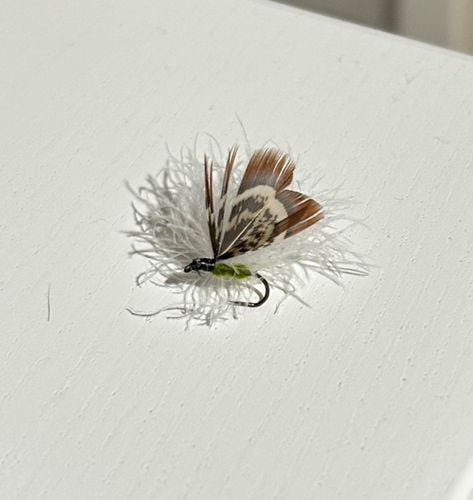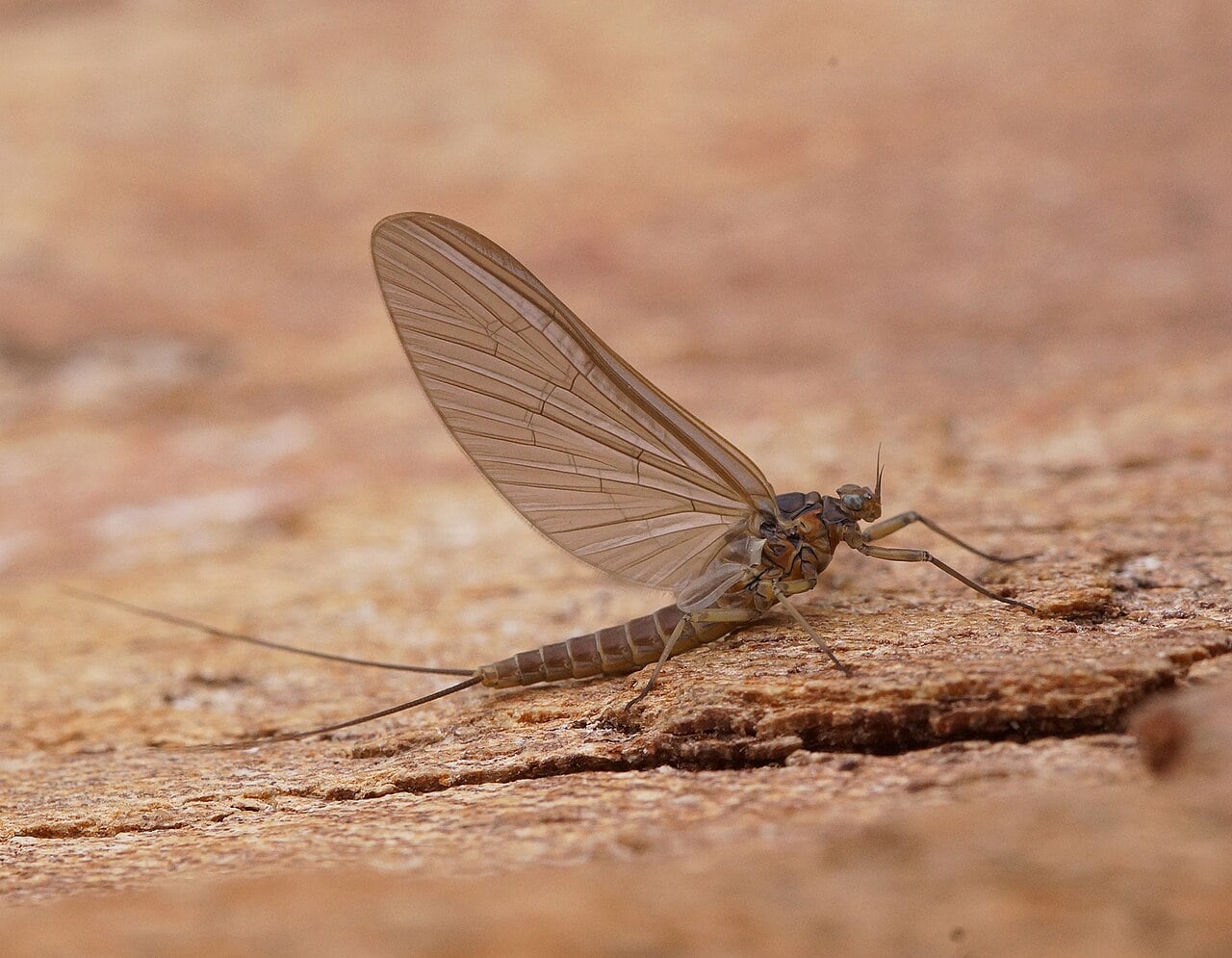
Iron Blue Dun
Nigrobaetis niger — Iron Blue, Jenny Spinner, Little Claret Spinner
The fly fisher's dark secret — a small, near-black mayfly that hatches prolifically in cold, blustery conditions when nothing else is on the water.
Mayflies — Ephemeroptera
Baetidae
Body 5–7 mm / Hook size 16–18
Midday (cold-weather hatches)
Chalk streams and faster gravel rivers
Lifecycle
The Iron Blue nymph is a fast-swimming Baetid adapted to hatching in adverse conditions. The emergence strategy is unusual: rather than emerging on calm, warm evenings, it hatches in large numbers on cold, wet, or overcast days in spring and autumn.
Peak months
The Iron Blue Dun is the dark horse of European fly fishing hatches. While most anglers pack up on cold, grey April days with a rising wind, the angler who stays discovers some of the most intense surface feeding of the entire season.
Fishing tips
The Miserable-Day Advantage
If you see Iron Blues hatching in cold, blustery conditions, resist the urge to leave. These are often the most productive hours of the season. Fish are hungry, the hatch is reliable, and there is rarely competition from other anglers.
Fly patterns
Other hatches
TerrestrialsBlack Gnat
Bibio johannisA ubiquitous summer terrestrial — the Black Gnat is available to fish on virtually every European river when other hatches are quiet.
MayfliesBlue Winged Olive
Serratella ignitaThe most important small olive on British and European chalk streams — reliable, widespread, and technically demanding.
Midges & DipteraBuzzer / Midge
Chironomidae sp.The most important insect of all on stillwaters — year-round, in every month, on every productive lake and reservoir in Europe.
MayfliesCaenis
Caenis horariaThe infuriatingly tiny mayfly that hatches in such vast numbers that fish refuse to look at anything larger — the tying and presentation challenge of a lifetime.
CaddisfliesCinnamon Sedge
Limnephilus lunatusA common summer evening caddis found across Europe — its reliable evening hatches from June to August provide consistent dry fly fishing.