March Brown
Rhithrogena germanica — Early Brown, Great Red Spinner
The first major hatch of the European fly fishing season — a welcome sight on cold, rocky rivers in early spring.
Mayflies — Ephemeroptera
Heptageniidae
Body 10–14 mm / Hook size 12–14
Midday
Rocky, fast-flowing upland rivers and streams with good water clarity
Lifecycle
March Brown nymphs are among the most distinctive of all European mayfly nymphs. Belonging to the Heptageniidae (flat-headed mayflies), they have a broadly flattened head and disc-like body designed for clinging to the upper surfaces of stones in fast currents without being swept away. The nymph is mottled brown with strong legs and develops progressively darker wing cases as it approaches emergence.
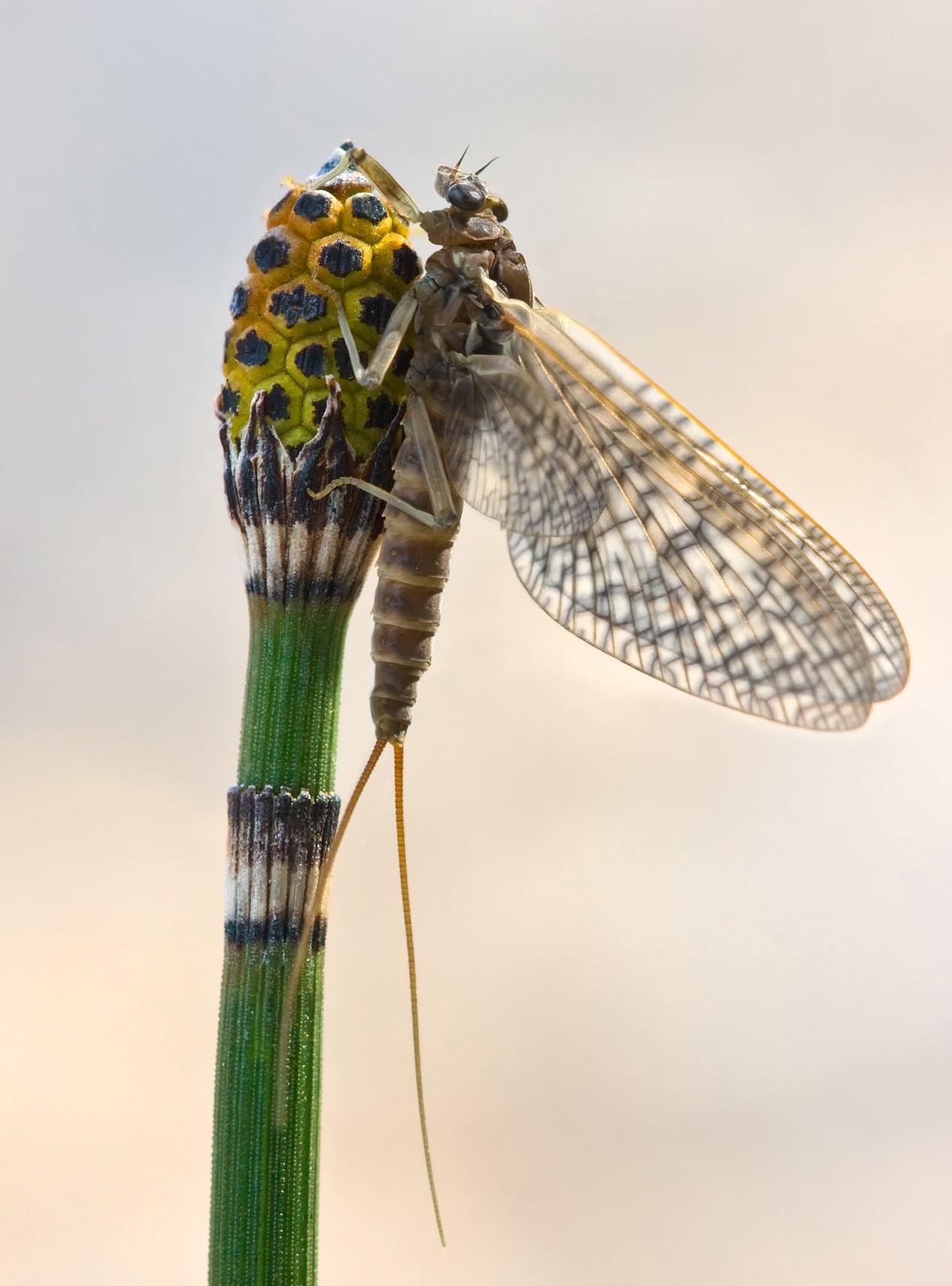
Emergence occurs in March and April on warmer midday hours when water temperature briefly rises above 8 °C. Unlike many mayflies that hatch in the film, March Brown nymphs often crawl to the water's edge or onto exposed stones to hatch, though in faster water many hatch in the current. The dun is a large, mottled brown fly with distinctive cream-barred body segments — a rich, satisfying pattern to tie and to match.
The spinner (Great Red Spinner) has transparent wings with a distinctive red-brown body and is most visible on calm evenings, though spinner falls are less dramatic than those of chalk stream mayflies.
Peak months
The March Brown holds a special place in fly fishing history as the hatch that signals the true beginning of the new season. In cold, northern and upland rivers where the fly fishing calendar starts later, seeing the first March Browns drifting on the surface in early April is cause for genuine excitement. For many anglers, it represents months of anticipation finally fulfilled.
Rhithrogena germanica is a stone-clinging nymph found on rocky, well-oxygenated rivers with clean gravels — the type of habitat found in Wales, Scotland, Northern England, and the upland rivers of Central Europe. It is not a chalk stream species; the March Brown prefers faster, more turbulent water with reliable oxygen levels year-round.
The hatching dun is a robust, well-proportioned fly. The mottled brown wings, three-segmented tail, and barred olive-brown body make it one of the most handsome of all European upwinged flies. Trout and grayling emerging from their winter lethargy are often willing to take the March Brown even in quite cold water, making it a forgiving hatch for early-season dry fly fishing.
Found widely across Wales, Scotland, Northern England, Ireland, Scandinavia, and the upland river systems of Central Europe. In many regions it is the only substantial upwinged hatch of early spring.
Fishing tips
Midday Ambush
The March Brown hatch typically occurs during the warmest part of the day in early spring — between 11am and 2pm. Position yourself on a productive run or riffle and watch for duns appearing and fish starting to take them. In cold weather the hatch may be brief; be ready and in position before it begins.
Upstream Dry Fly
Classic upstream presentation with a size 12–14 March Brown dry fly. These are not heavily selective fish — their over-winter appetite overrides any caution. A bushy, well-hackled pattern sits well in turbulent runs. Approach stealthily: spring banks are often low and clear, and trout are alert after months of quiet.
Nymph on the Swing
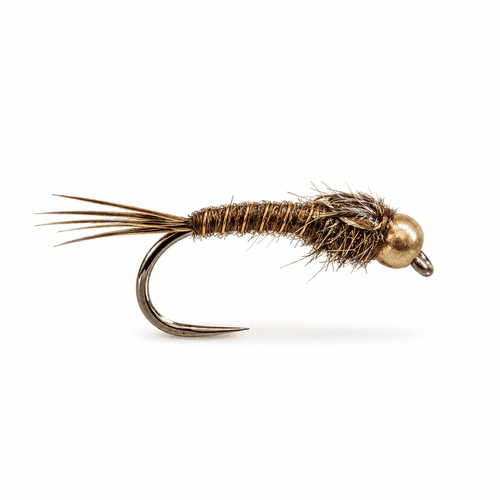
On days when the hatch is slow or fish are reluctant to the surface, a March Brown or Heptagenid nymph pattern (flattened profile, size 12–14) swung across the current on a long leader produces results. The swing mimics the natural's drift toward the bankside stones where emergence often occurs.
Fly patterns
Target species
Shop Our Flies
Other hatches
MayfliesGreen Drake
Ephemera danicaThe iconic mayfly of British chalk streams — its annual emergence signals the most celebrated fortnight in fly fishing.
MayfliesBlue Winged Olive
Serratella ignitaThe most important small olive on British and European chalk streams — reliable, widespread, and technically demanding.
MayfliesIron Blue Dun
Nigrobaetis nigerThe fly fisher's dark secret — a small, near-black mayfly that hatches prolifically in cold, blustery conditions when nothing else is on the water.
MayfliesCaenis / Angler's Curse
Caenis horariaThe infuriatingly tiny mayfly that hatches in such vast numbers that fish refuse to look at anything larger — the tying and presentation challenge of a lifetime.
CaddisfliesGrannom
Brachycentrus subnubilisThe first major caddis of the year — appearing in huge April swarms, the Grannom kick-starts the surface fly fishing season on chalk streams.