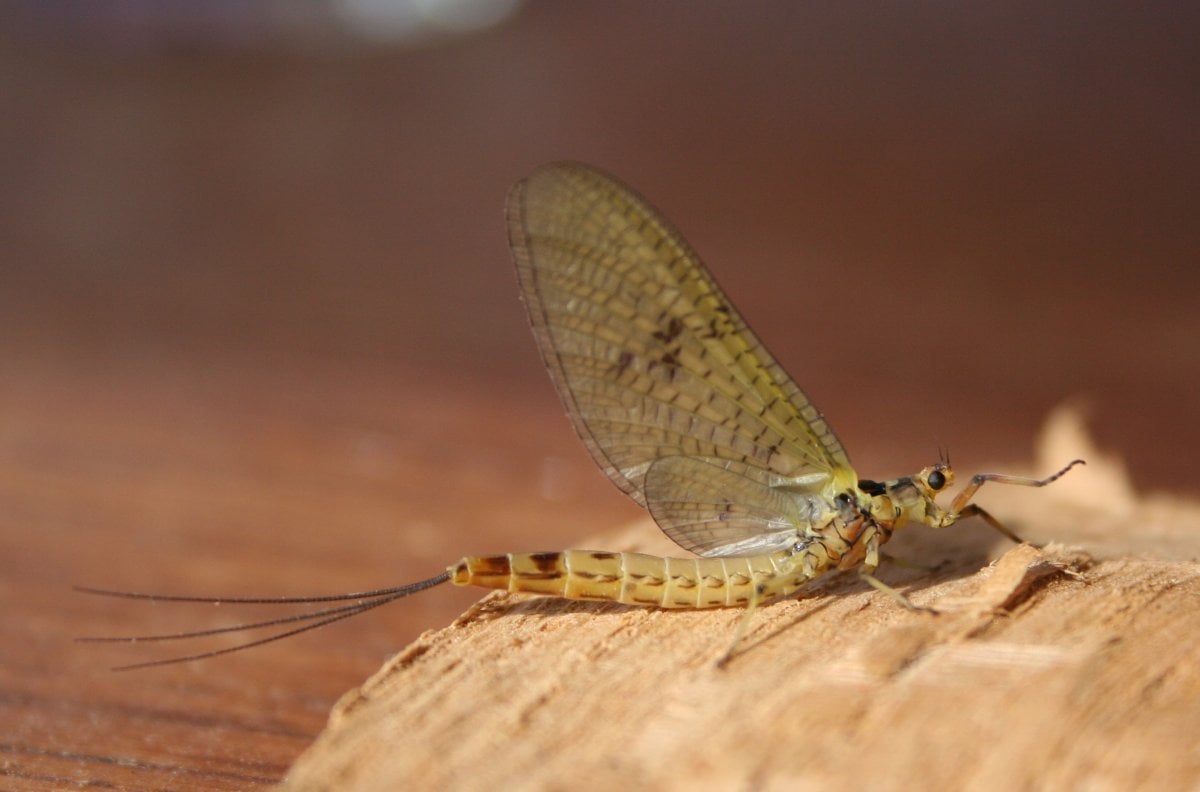
Green Drake
Ephemera danica — Mayfly, Up-winged fly
The iconic mayfly of British chalk streams — its annual emergence signals the most celebrated fortnight in fly fishing.
Mayflies — Ephemeroptera
Ephemeridae
Body 18–22 mm / Hook size 10–12
Afternoon & evening
Chalk streams, limestone rivers, and alkaline stillwaters
Lifecycle
The Green Drake passes through an unusually long nymphal period of one to two years, burrowing deep into the silt and fine gravel of chalk-stream beds. The U-shaped burrow nymph is large and distinctive, with three feathery tails and heavily fringed gills.
Peak months
No hatch commands more reverence in British fly fishing than the Green Drake. For two to three weeks each spring, chalk streams transform. Wild brown trout that spend most of the year feeding cautiously below the surface throw caution aside, rising freely to drakes throughout the day.
Fishing tips
Matching the Dun
During the afternoon dun emergence, fish a size 10–12 Green Drake dry fly tied on a wide-gape hook, presented drag-free in the fish's feeding lane. Trout often move upstream to intercept duns, so watch rise form carefully.
Fly patterns
Other hatches
TerrestrialsBlack Gnat
Bibio johannisA ubiquitous summer terrestrial — the Black Gnat is available to fish on virtually every European river when other hatches are quiet.
MayfliesBlue Winged Olive
Serratella ignitaThe most important small olive on British and European chalk streams — reliable, widespread, and technically demanding.
Midges & DipteraBuzzer / Midge
Chironomidae sp.The most important insect of all on stillwaters — year-round, in every month, on every productive lake and reservoir in Europe.
MayfliesCaenis
Caenis horariaThe infuriatingly tiny mayfly that hatches in such vast numbers that fish refuse to look at anything larger — the tying and presentation challenge of a lifetime.
CaddisfliesCinnamon Sedge
Limnephilus lunatusA common summer evening caddis found across Europe — its reliable evening hatches from June to August provide consistent dry fly fishing.