Caenis / Angler's Curse
Caenis horaria — Angler's Curse, Caenis, White Midge Mayfly
The infuriatingly tiny mayfly that hatches in such vast numbers that fish refuse to look at anything larger — the tying and presentation challenge of a lifetime.
Mayflies — Ephemeroptera
Caenidae
Body 4–6 mm / Hook size 18–22
Early morning & late evening
Stillwaters, slow river glides, and lowland lakes with silt-rich bottoms
Lifecycle
Caenis nymphs are crawlers and burrowers in fine silt and organic debris, found in the still and slow-moving margins of lakes, reservoirs, and low-gradient river glides. They are tiny — just 3–5 mm — and numerous, often present in extraordinary densities in productive waters.
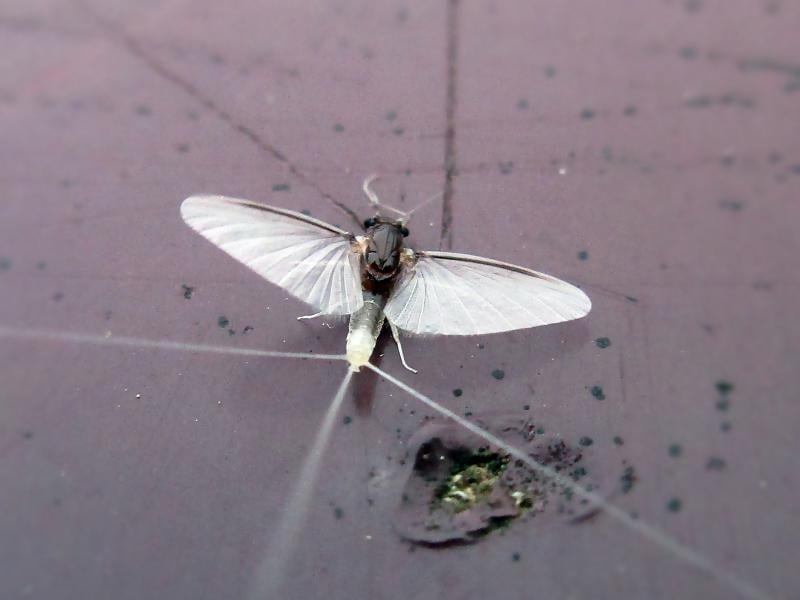
Emergence is rapid and en masse. Caenis hatch in such vast numbers — hundreds of thousands simultaneously — that the surface of a lake or calmer section of river can appear frosted with tiny white wings. The nymph hatches, the dun moults almost immediately to the spinner (sometimes in under a minute on warm evenings), and the spinners mate and fall spent within the same brief window. The whole cycle is compressed.
This speed and density is what makes Caenis hatches so challenging. Fish are surrounded by thousands of naturals and can afford to be extremely selective, rejecting anything larger or improperly presented. The angler attempting to match the Caenis spinner requires tiny flies, impossibly fine tippets, and near-perfect presentation.
Peak months
The Caenis earned its nicknames — "Angler's Curse", "the White Curse" — honestly. When these tiny white mayflies appear in June on a warm summer evening, trout and grayling enter feeding frenzies that appear unstoppable yet are almost impossible to interrupt with an artificial fly. The fish are surrounded by food and demand perfection.
Caenis horaria is found throughout Europe on stillwaters, reservoir margins, and calm river backwaters with silty substrates. It is perhaps more important on lakes and reservoirs — the English chalk stream reservoirs, the limestone loughs of Ireland, and the large Scandinavian and Baltic lakes — than on rivers, though slow glides in lowland rivers see equally intense hatches.
The ecological significance of Caenis in the food chain is enormous. In August on a productive stillwater, a Caenis fall can represent thousands of calories suddenly available at the surface, and fish that have been deep-feeding all day in warm water respond with sustained surface activity that may continue for two to three hours.
For grayling, the Caenis is particularly important in late summer and autumn when the fish are building condition before spawning. Grayling rivers with productive Caenis populations often show exceptional fish size in September–October.
Fishing tips
Embrace the Difficulty
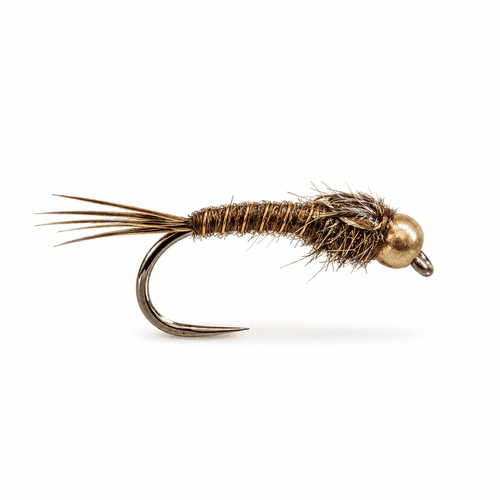
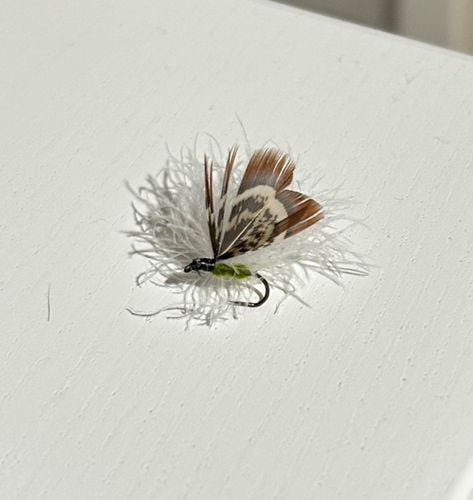
Accept that matching the Caenis precisely enough to fool consistently selective fish requires size 20–22 flies and 8X tippet — tackle most anglers rarely use. Prepare your Caenis box before the season: Caenis Spinner (white wings, cream body), tiny CDC emergers, and spent patterns in size 18–22.
Target the Margins
On stillwaters, cruising fish feeding on Caenis follow the spinner drift line, often in the margins. Position parallel to the bank, identify the fish's direction of travel, and drop your tiny spent pattern well ahead of its path. A single precise presentation beats repeated casts that scare the fish.
Try a Larger Attractor
When exact imitation fails completely (which it often does), some anglers fish a single large, contrasting fly (size 12 White Wulff or parachute) in among the feeding fish. Occasionally a fish will break from its pattern to take the novelty, particularly early in the hatch before full lock-on occurs. It is a desperate measure but sometimes works.
Fly patterns
Target species
Shop Our Flies
Other hatches
MayfliesGreen Drake
Ephemera danicaThe iconic mayfly of British chalk streams — its annual emergence signals the most celebrated fortnight in fly fishing.
MayfliesBlue Winged Olive
Serratella ignitaThe most important small olive on British and European chalk streams — reliable, widespread, and technically demanding.
MayfliesMarch Brown
Rhithrogena germanicaThe first major hatch of the European fly fishing season — a welcome sight on cold, rocky rivers in early spring.
MayfliesIron Blue Dun
Nigrobaetis nigerThe fly fisher's dark secret — a small, near-black mayfly that hatches prolifically in cold, blustery conditions when nothing else is on the water.
CaddisfliesGrannom
Brachycentrus subnubilisThe first major caddis of the year — appearing in huge April swarms, the Grannom kick-starts the surface fly fishing season on chalk streams.