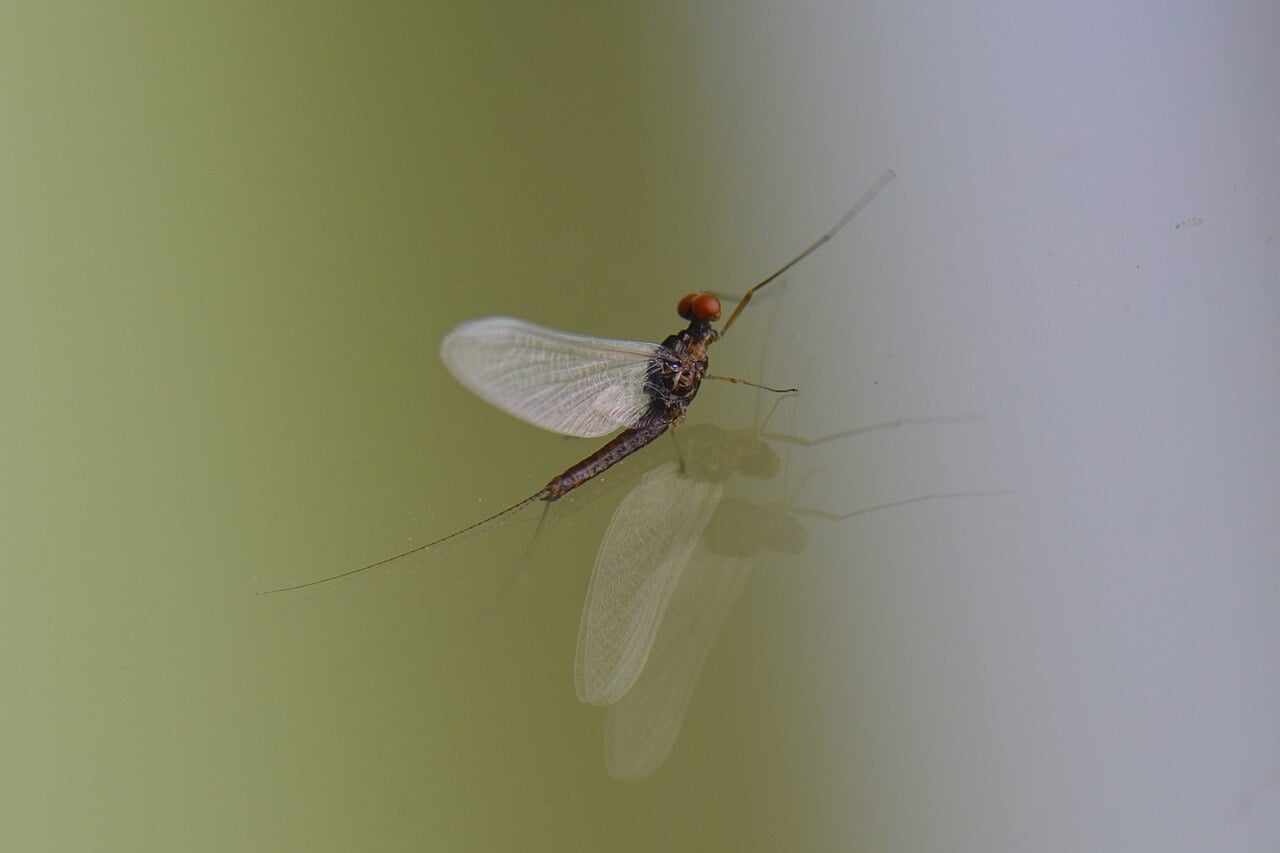
Blue Winged Olive
Serratella ignita — BWO, Small Olive, Evening Olive
The most important small olive on British and European chalk streams — reliable, widespread, and technically demanding.
Mayflies — Ephemeroptera
Ephemerellidae
Body 7–9 mm / Hook size 14–18
Late afternoon & evening
Chalk streams, fast riffles, and gravel-bedded rivers
Lifecycle
The Blue Winged Olive nymph is a crawler, living among stones and weed on the river bed. Unlike burrowing Ephemera nymphs, BWO nymphs are agile and free-living, with a visible olive abdomen and distinctive three tails.
Peak months
The Blue Winged Olive is arguably the most important hatch for European chalk stream anglers. While the Green Drake grabs the headlines, the BWO provides consistent and technically demanding fly fishing from April through October across a far wider range of rivers.
Fishing tips
Dun Presentation
Start with a CDC Dun or Parachute BWO in size 14–16 for the main dun emergence. Position yourself below and to the side of rising fish and cast slightly upstream with a slack-leader presentation to avoid drag.
Fly patterns
Other hatches
TerrestrialsBlack Gnat
Bibio johannisA ubiquitous summer terrestrial — the Black Gnat is available to fish on virtually every European river when other hatches are quiet.
Midges & DipteraBuzzer / Midge
Chironomidae sp.The most important insect of all on stillwaters — year-round, in every month, on every productive lake and reservoir in Europe.
MayfliesCaenis
Caenis horariaThe infuriatingly tiny mayfly that hatches in such vast numbers that fish refuse to look at anything larger — the tying and presentation challenge of a lifetime.
CaddisfliesCinnamon Sedge
Limnephilus lunatusA common summer evening caddis found across Europe — its reliable evening hatches from June to August provide consistent dry fly fishing.
TerrestrialsCommon Cockchafer
Melolontha melolonthaDuring evening flights, heavy beetles fall onto water and become high-value mouthfuls for surface-feeding fish.