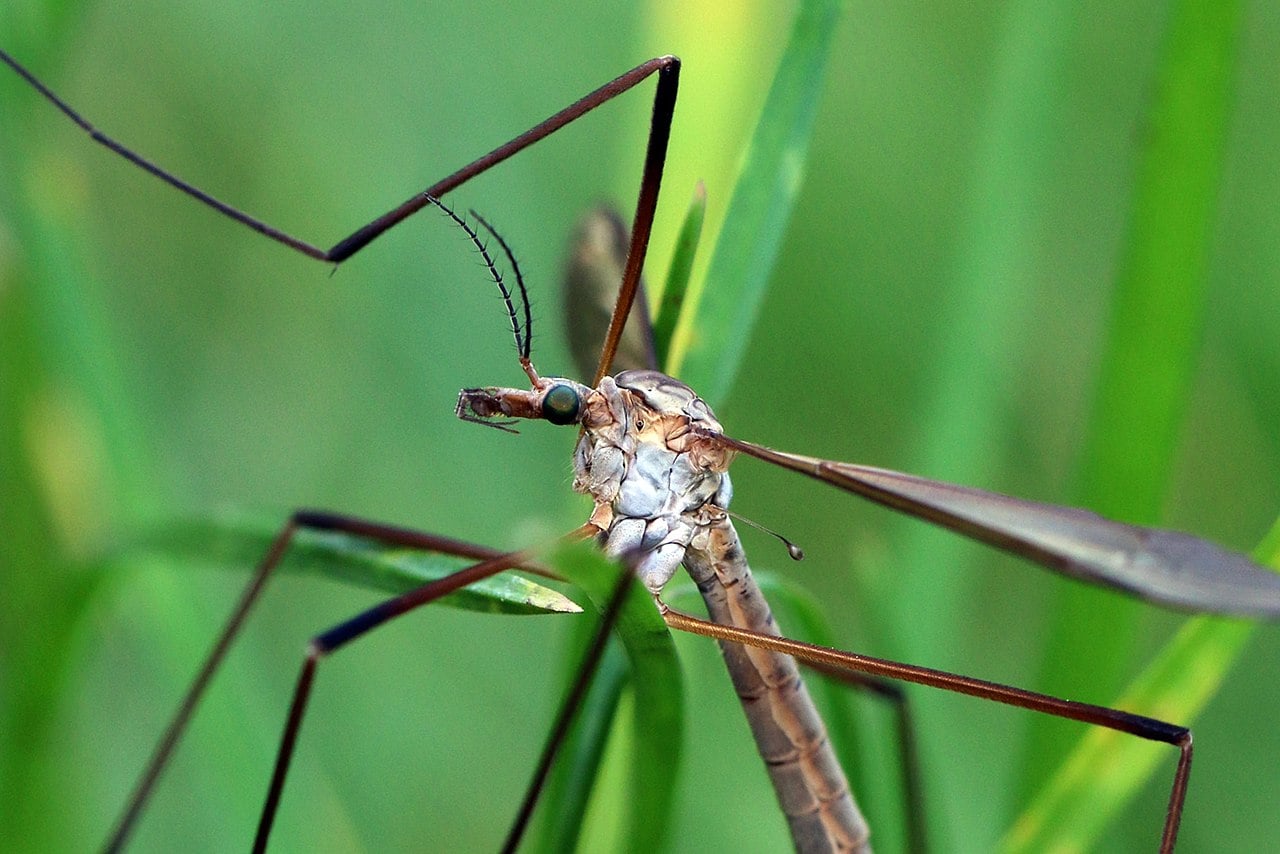
Crane Fly / Daddy Long Legs
Midges & Diptera

Crane Fly / Daddy Long Legs

Tipula spp. Daddy Long Legs, Daddy, Leatherjacket (larva)

When autumn daddy-long-legs blow onto rivers and lakes in August and September, trout abandon all caution for these clumsy, irresistible mouthfuls.


Order

Midges & Diptera — Diptera

Family

Tipulidae

Size / Hook

Body 20–30 mm / Hook size 8–12

Emergence

All day when windy (blown terrestrial)

Water type

Rivers and stillwaters adjacent to damp grassland, marsh, and moorland — anywhere the larvae (leatherjackets) live in the soil

Lifecycle

The Crane Fly (Tipula species) is a terrestrial insect whose aquatic relevance is entirely accidental — the adult does not hatch from water but from the soil, where its larva (the leatherjacket) lives for up to 11 months feeding on plant roots. The adult crane fly is a poor flier, and in late summer and autumn when populations peak, numbers of adults are blown from bankside meadows and moorlands onto the water surface by the wind.

Once on the water, the crane fly is helpless. Its long legs and large body create a significant disturbance on the surface film as it struggles, making it highly visible and creating surface ripples that attract fish from considerable distances. The insect is unable to take off in normal conditions once it has landed on water.

The mating adults congregate in vast numbers in late August and September in damp grassland adjoining watercourses and lake margins. On windy days during this period — particularly with an onshore or cross-wind — the falls of cranefly onto water can be extraordinary, and the fish respond accordingly. The "Daddy" days of August and early September represent some of the most exciting and accessible surface fly fishing of the year.


Peak months
August
September
October

Few flies inspire more excitement in trout than a flailing crane fly. Unlike the delicate selectivity required for matching small mayflies, a large "Daddy" pattern is a confident, aggressive offering that provokes equally confident, aggressive responses. Even the largest and most wary wild brown trout will cross metres of open water to take a well-presented crane fly.

The crane fly season corresponds to a critical period in the trout's feeding calendar. By late August, wild brown trout are building condition for the autumn spawning season and their food intake is increasing. The large energy reward of a crane fly — significantly more than any midge or small mayfly — makes the decision to take simple.

Crane fly fishing is also a great equaliser. It works on fast rocky rivers, chalk streams, upland lakes, and lowland reservoirs. An angler who has never matched a hatch in their life can present a Daddy Long Legs pattern on any August afternoon and catch fish. For more experienced anglers, the ability to read the wind, anticipate where falls will concentrate, and reach individual fish cruising in open water makes crane fly fishing deeply satisfying.

The species is universal across Europe wherever cattle pasture, rough grassland, or moorland adjoins water.


Fishing tips

Reading the Wind

Position yourself on the downwind bank or shore — this is where cranefly will accumulate on the water surface. On a windy August day, walk the bank before fishing to observe where daddies are landing and where fish are rising. Runs and bays that collect windfall are often productive before the fly even starts fishing.

Big, Bushy Presentation

A size 8–10 foam or deerhair Daddy Long Legs — with prominent extended legs from knotted pheasant tail fibres — is the classic pattern. Grease a spot of floatant into the tying and it will sit perfectly on the surface for a long session. Cast to individual rising fish or drift the pattern into productive areas on a slack line allowing natural movement.

The Twitch

A natural crane fly struggles continuously. After a stationary presentation fails on a sighted fish, a single gentle twitch of the tip — just enough to move the fly 3–5 cm — will often trigger an immediate strike. Do not over-twitch; one confident movement is sufficient.


Fly patterns
Foam Daddy Long Legs
CDC Crane Fly
Deerhair Daddy
Daddy Long Legs (knotted legs)
Stimulator (as attractor)


Shop Our Flies
Snowflake Caddis

Snowflake Caddis

€4.20
5 in stock
Limited edition
Foam Wasp Terrestrial

Foam Wasp Terrestrial

€3.40
Out of stock
Pre-order
Black Beadhead Midge Nymph

Black Beadhead Midge Nymph

€2.50
12 in stock
Yellow Owl F-Fly

Yellow Owl F-Fly

€4.10
Only 1 left