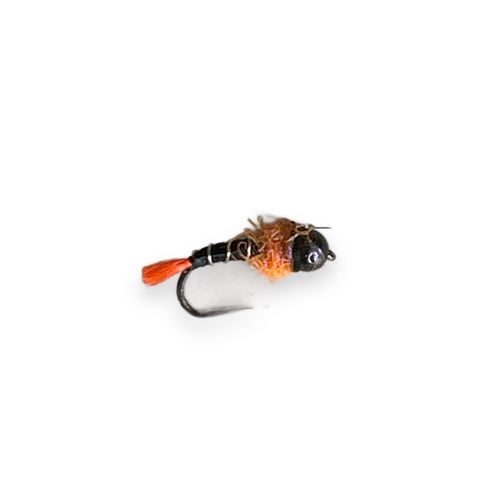
Rainbow Trout
Oncorhynchus mykiss
Introduced from North America, the rainbow now thrives across Europe and offers acrobatic sport in rivers, lakes, and reservoirs.
Cold, well-oxygenated rivers and lakes. Tolerates slightly warmer water than brown trout and adapts well to still-water fisheries.
25–65 cm, typically 0.5–2.5 kg on rivers; reservoir fish can run 3–5 kg.
Oncorhynchus mykiss
Widely introduced across Europe. Prevalent in England, France, Germany, Austria, Czech Republic, Poland, and Nordic countries.
Although not native to European rivers, the rainbow trout has been so thoroughly integrated into the fly fishing landscape that it would be unimaginable without it — particularly on still-water fisheries and managed chalk stream beats.
On chalk streams, wild or naturalised rainbow trout often match the wariness and selectivity of brown trout. On reservoir fisheries, they are the primary target species.
Fly fishing tactics
Reservoir Loch-Style
Drifting a large still-water loch in a boat, casting a team of three flies across the drift. Intermediate and floating lines; large buzzers in the evening.
Surface Dry Fly on Rivers
Rainbow trout are often less leader-shy than brown trout and respond well to attractor patterns even without an obvious hatch.
Recommended flies
Best months
Other species
Arctic Char
Salvelinus alpinusA relic from the last Ice Age — the arctic char inhabits the coldest and deepest lakes of Northern Europe and offers pure wilderness fly fishing.
Asp
Leuciscus aspiusA fast, aggressive surface predator unique to European rivers — asp fly fishing combines the excitement of sight fishing with explosive surface takes.
Atlantic Salmon
Salmo salarThe king of rivers — a powerful anadromous fish that returns from the ocean to spawn in its birth river.
Barbel
Barbus barbusA powerful bottom-feeding river specialist whose strength in fast current makes it one of Europe's most underrated fly-rod fish.
Brown Trout
Salmo truttaThe most iconic freshwater fish in European fly fishing — wary, selective, and endlessly fascinating.