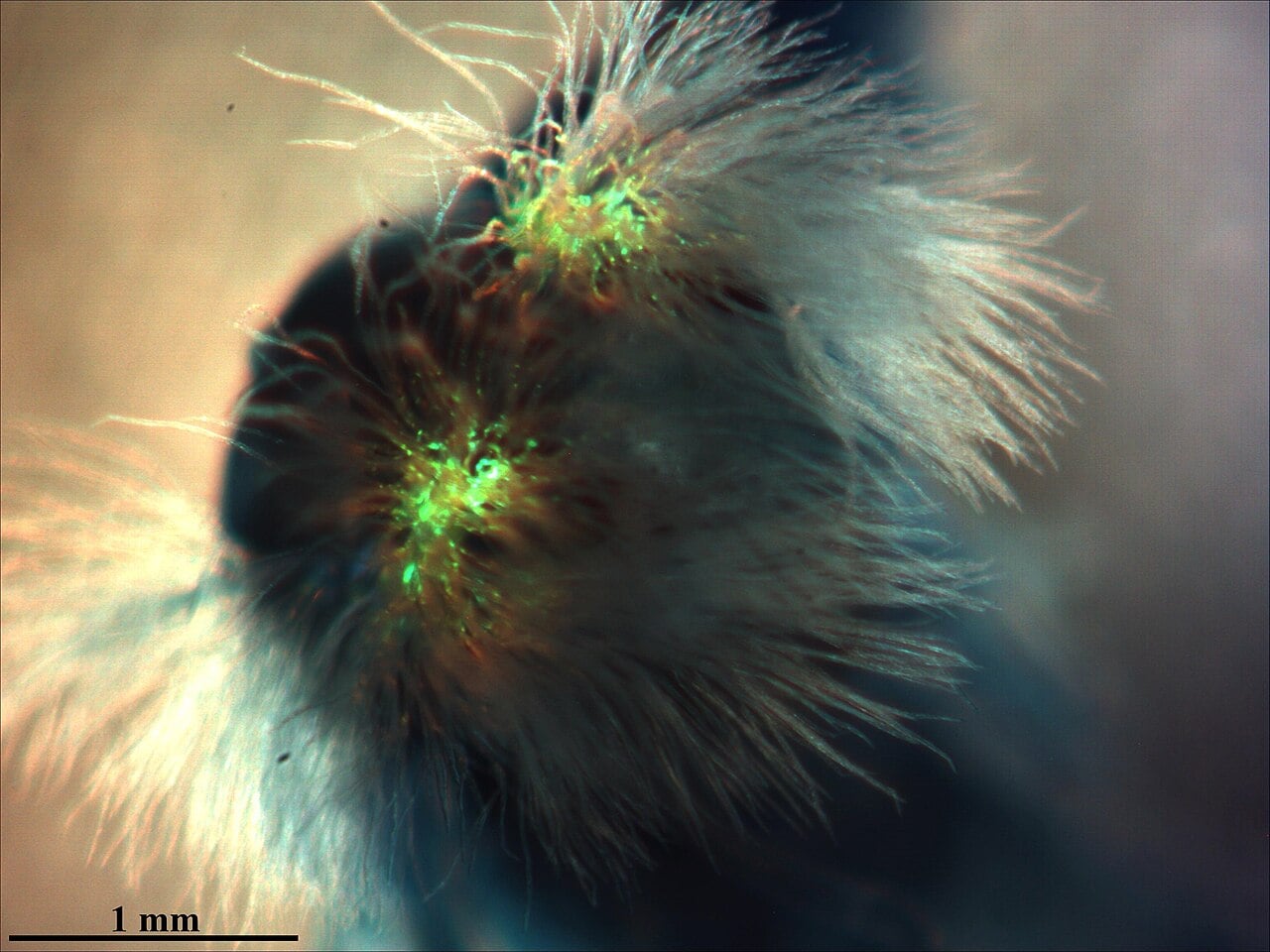
Buzzer / Midge
Chironomidae sp. — Buzzer, Duck Fly, Blood Worm (larva), Pupa
The most important insect of all on stillwaters — year-round, in every month, on every productive lake and reservoir in Europe.
Midges & Diptera — Diptera
Chironomidae
Body 5–16 mm (highly variable by species) / Hook size 10–18
All day, with peaks morning & evening
Stillwaters, reservoirs, lochs, and slow river glides — wherever there is still or slow-moving water
Lifecycle
The Chironomidae are not one insect but a family of thousands of species, varying from 5 mm to over 15 mm in body length. What unites them for fly fishing purposes is their characteristic lifecycle and the crucial vulnerability of the pupal stage at the surface film.
The larva (Bloodworm) lives buried in fine lake sediment or in algal mats. Many species are red from haemoglobin, giving the "Bloodworm" name that describes a critical food resource in all productive stillwaters. The larval stage spans months; midge larvae are the dominant invertebrates in lake sediments.
Pupation occurs quickly — within days — and the pupa then ascends through the water column, often hanging just below or in the surface film for extended periods before the adult hatches. This hanging behaviour, with the pupa suspended vertically in the film, is the signature of midge pupae and the basis for "Buzzer" fishing: dry-dropper rigs or floating leaders with multiple pupa patterns hanging at various depths in the film. On cold days or in cold water the pupa may hang for 10–20 minutes before hatching, making it supremely vulnerable to predation.
Peak months
If there is one group of insects that an angler must understand before fishing any European stillwater, it is the midges. On reservoirs, lochs, and loughs from Ireland to the Baltic, midge pupae suspended in the surface film account for the majority of a stillwater trout's annual diet. The Buzzer is not glamorous fishing — there is rarely a dramatic visual hatch or a swirling rise — but the angler who masters it will catch more fish on more days than any other stillwater technique.
The Chironomid family provides food year-round. Even in January and February on mild days, midges hatch on British and Irish stillwaters. The "Chironomid rise" — a series of barely perceptible head-and-tail sipping rises as trout cruise the top 30 cm of water — can appear on any calm day in any month.
Buzzers come in a bewildering array of colours — black, red, orange, green, olive, claret, brown — and the correct colour can be critical on hard-fished waters. Carrying a comprehensive box of midge pupae in multiple sizes and colours is as important to a stillwater angler as a full dry fly box is to a river fisher.
On rivers, midge pupae are most significant in slow glides and weedy chalk stream stretches, particularly in spring and autumn. Grayling are particularly fond of midge pupae suspended in the surface film on quiet winter days.
Fishing tips
Static Buzzer on Still Water
The classic technique: a floating or intermediate line with a long (18+ ft) fluorocarbon leader and three or four Buzzer patterns spaced 3–4 ft apart at different depths. Cast to rising fish or to known feeding areas, allow the rig to settle, and fish it completely static. Watch the leader tip or a tiny strike indicator where the leader enters the water. Takes are subtle lifts or slight movements.
Slow Retrieve
If static fishing is slow, move the flies with a slow, figure-of-eight retrieve that barely disturbs the presentation. This slight movement can trigger fish that are not committing to the static fly, mimicking the natural's slow ascent through the water column.
Matching the Hatch by Colour
Take a marrow scoop sample of the surface film when fish are feeding to identify the species and colour present. Black and red buzzers work year-round; orange and olive are most productive April–June; claret and green are excellent in autumn. Size is critical — scale down to size 16–18 in clear, shallow water on calm summer days.
Fly patterns
Target species
Shop Our Flies
Other hatches
MayfliesGreen Drake
Ephemera danicaThe iconic mayfly of British chalk streams — its annual emergence signals the most celebrated fortnight in fly fishing.
MayfliesBlue Winged Olive
Serratella ignitaThe most important small olive on British and European chalk streams — reliable, widespread, and technically demanding.
MayfliesMarch Brown
Rhithrogena germanicaThe first major hatch of the European fly fishing season — a welcome sight on cold, rocky rivers in early spring.
MayfliesIron Blue Dun
Nigrobaetis nigerThe fly fisher's dark secret — a small, near-black mayfly that hatches prolifically in cold, blustery conditions when nothing else is on the water.
MayfliesCaenis / Angler's Curse
Caenis horariaThe infuriatingly tiny mayfly that hatches in such vast numbers that fish refuse to look at anything larger — the tying and presentation challenge of a lifetime.


