Cinnamon Sedge
Limnephilus lunatus — Summer Sedge, Reed Smut
A common summer evening caddis found across Europe — its reliable evening hatches from June to August provide consistent dry fly fishing.
Caddisflies — Trichoptera
Limnephilidae
Body 10–14 mm / Hook size 12–14
Evening
Wide variety — chalk streams, freestone rivers, and stillwaters throughout Europe
Lifecycle
Limnephilus lunatus larvae build mobile cases from fine gravel and plant fragments, and they are adaptable across a wide range of flowing and still water habitats. The larval period extends through autumn and winter, with the larva overwintering in its case before pupating in spring. Pupation occurs in a sealed case attached to submerged stones or weed.
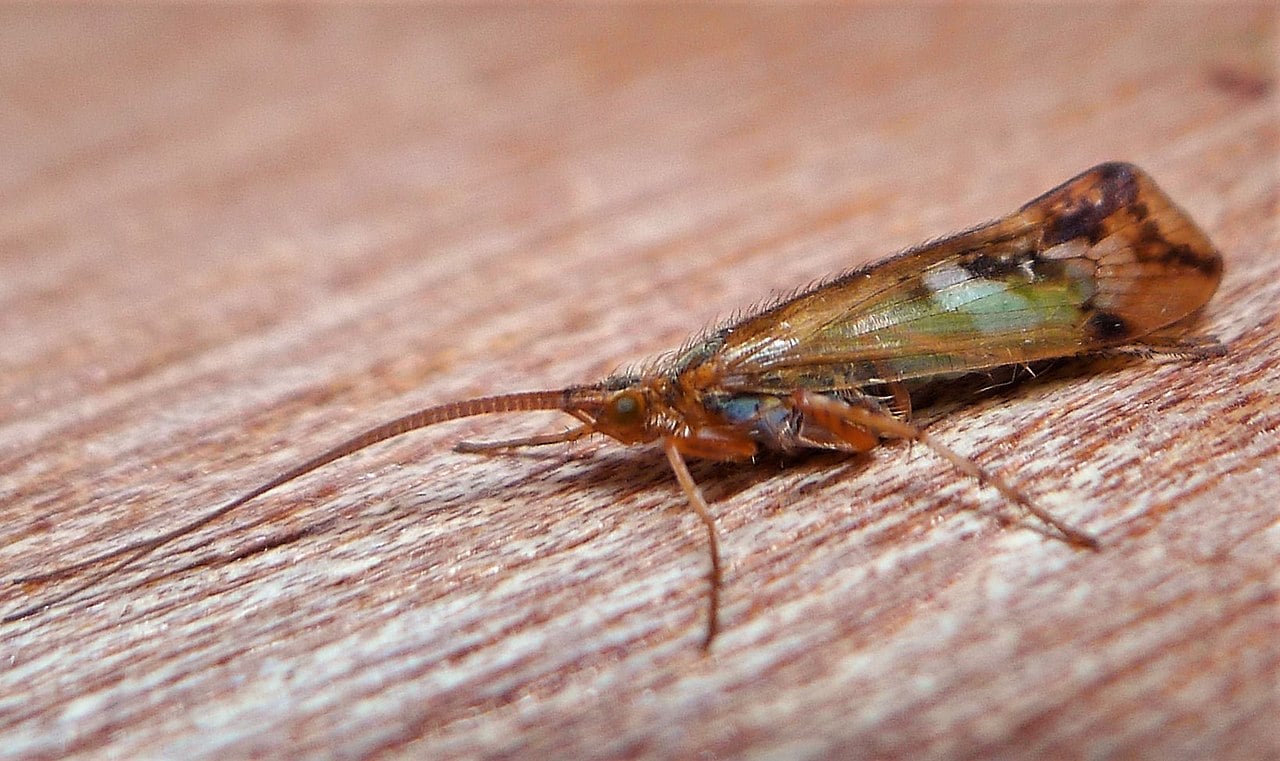
The pupa swims actively to the surface in the evening — typically appearing from June through August across its European range. The adult hatches through the film and its cinnamon-brown, finely patterned wings make it one of the most aesthetically pleasing of the common sedge species. The wings are held tent-like over the body at rest — the characteristic sedge profile familiar to any river angler.
Egg-laying females return to the water surface in the evening, either dipping to touch the surface film or in some cases diving below to lay eggs on submerged stones. Both stages attract feeding fish. The species completes one generation per year.
Peak months
The Cinnamon Sedge is one of the most reliable and widespread summer caddisflies in Europe. Unlike its more localised cousins, Limnephilus lunatus and the closely related Limnephilid sedges appear on virtually every river and lake system from the British Isles through Central Europe, on chalk streams and mountain freestone rivers alike.
The regular, predictable evening hatches of Cinnamon and related sedges from June through August provide some of the most consistent dry fly fishing of the summer season — particularly valuable in July and August when the main upwinged fly hatches have subsided and other surface activity is less reliable.
Caddisfly-feeding trout often exhibit a distinctive "head and tail" rise or a splashing rise as they chase adult sedges across the surface. The movement of the fly is critical — a static presentation is often ignored while a pattern that skates or creates a small wake will provoke immediate interest. This is different from mayfly fishing and requires the angler to adopt an actively manipulated presentation style.
Fishing tips
The Late Evening Rise
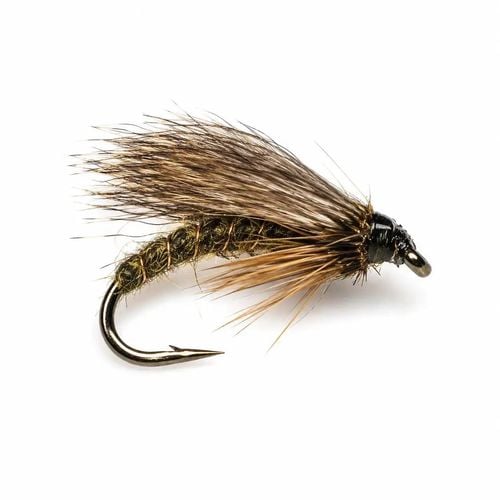
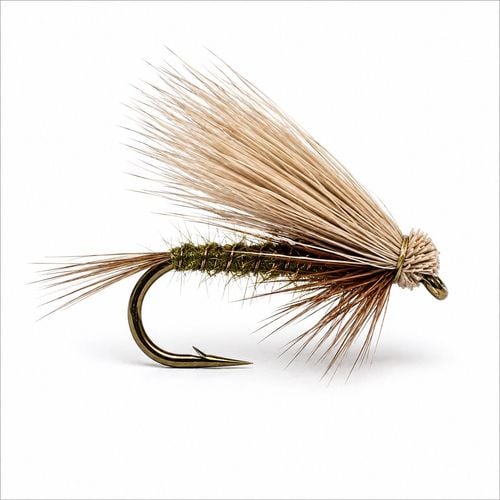
Position yourself on a productive pool or flat in the final hour before dark. Watch for the first sedges appearing over the water — adults flying low, touching the surface, caddis-rises beginning in the glides. Start with a CDC Caddis or Elk Hair Caddis in size 12–14, and fish it downstream on a slack line, allowing it to skate gently across the current.
Skating and Dragging
Deliberately induce subtle movement in your caddis dry — a light upstream mend that causes the fly to skate cross-stream, or a twitching retrieve on slow glides. Trout chasing sedges are in an aggressive, active feeding mode and will chase a moving target far more readily than a stationary dry fly.
Subsurface Caddis Pupa
A beaded Caddis Pupa in amber or cinnamon, fished on a floating line with a long tippet just below the surface film in the early evening, is excellent for fish not yet committed to topwater. Dead-drift then swing at the end of each drift to mimic the ascending pupa.
Fly patterns
Target species
Shop Our Flies
Other hatches
MayfliesGreen Drake
Ephemera danicaThe iconic mayfly of British chalk streams — its annual emergence signals the most celebrated fortnight in fly fishing.
MayfliesBlue Winged Olive
Serratella ignitaThe most important small olive on British and European chalk streams — reliable, widespread, and technically demanding.
MayfliesMarch Brown
Rhithrogena germanicaThe first major hatch of the European fly fishing season — a welcome sight on cold, rocky rivers in early spring.
MayfliesIron Blue Dun
Nigrobaetis nigerThe fly fisher's dark secret — a small, near-black mayfly that hatches prolifically in cold, blustery conditions when nothing else is on the water.
MayfliesCaenis / Angler's Curse
Caenis horariaThe infuriatingly tiny mayfly that hatches in such vast numbers that fish refuse to look at anything larger — the tying and presentation challenge of a lifetime.