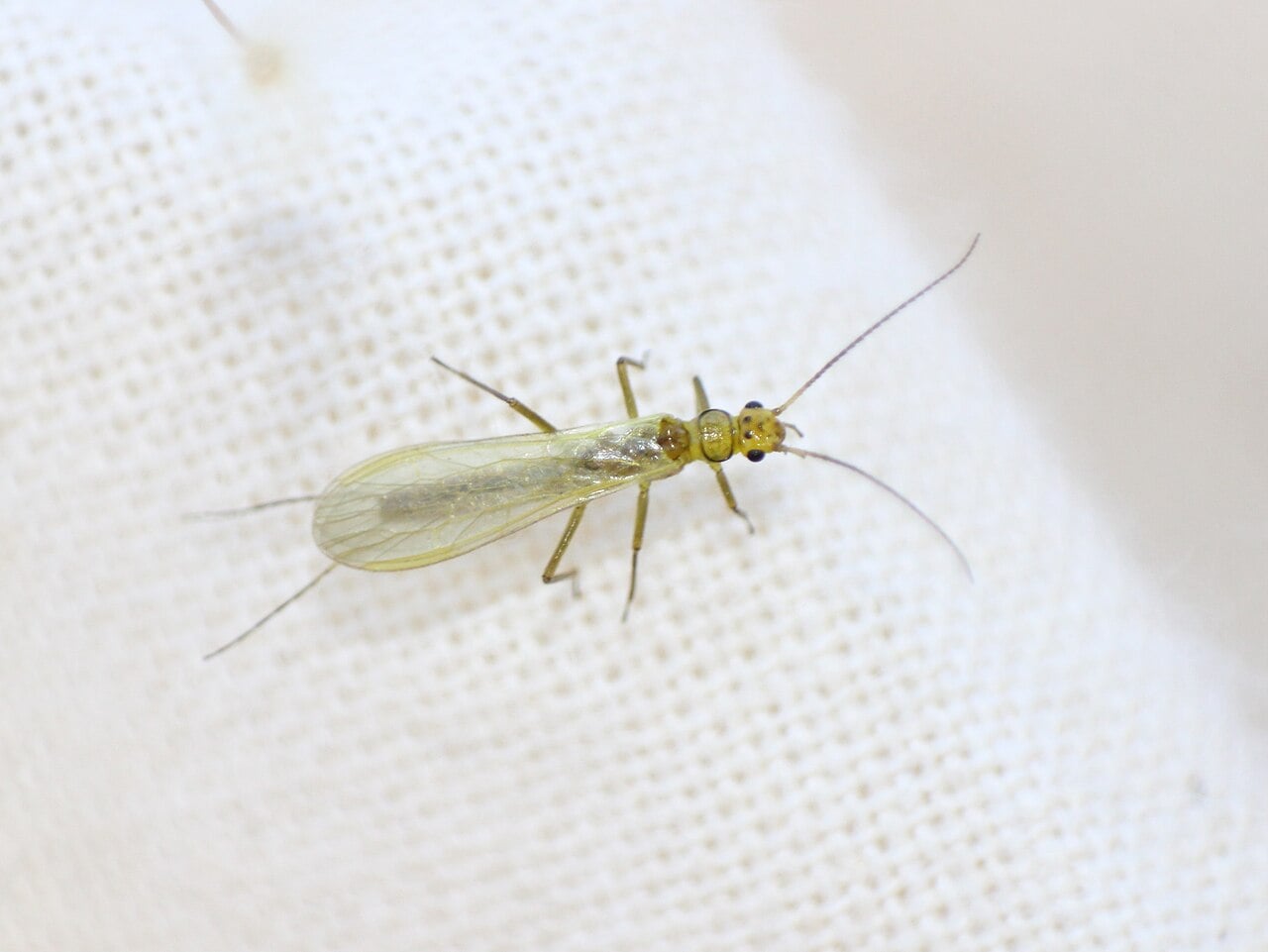
Yellow Sally
Isoperla grammatica — Small Yellow Stone, Willow Fly
A bright, cheerful little stonefly — the Yellow Sally's summer hatches on chalk streams and river riffles reliably bring trout and grayling to the dry fly.
Stoneflies — Plecoptera
Perlodidae
Body 8–11 mm / Hook size 14–16
Morning to afternoon
Chalk streams, clear gravel rivers, and moorland streams; very widespread across Europe
Lifecycle
The Yellow Sally nymph is a predator, hunting smaller invertebrates between the stones and gravel of fast-flowing river beds. Isoperla nymphs are active swimmers and crawlers, distinctively yellow-green in colouration — matching the colour of the silt between stones they inhabit. The larval period spans one to two years with the nymph developing through multiple instars.
Like all stoneflies, the Yellow Sally does not hatch in the water. The mature nymph crawls onto exposed rocks, weed stems, or bankside vegetation (particularly willow roots) and the adult emerges on the dry surface. Adults can be seen in large numbers resting on bankside vegetation and fence posts in May and June.
Adults are blown or fall onto the water more readily than the Large Stonefly due to their smaller size and lighter body weight. The bright yellow adults are highly visible on the water surface, and trout and grayling are quick to identify them as a food resource when numbers warrant. The distinct yellow coloration makes the Yellow Sally one of the easier hatches to identify and match.
Peak months
The Yellow Sally is one of the most delightful surprises of early summer fly fishing. On a warm June afternoon on an English chalk stream or a Welsh limestone river, suddenly noticing bright yellow stoneflies riding the current in twos and threes, and seeing grayling and trout rising to them, is a genuinely exciting discovery.
Isoperla grammatica is widespread and common throughout Europe — one of the most frequently encountered stoneflies on chalk streams, fast upland rivers, and the clean gravel rivers of Central Europe. Its cheerful yellow colouration and manageable size (14–16) make it a much more approachable hatch to match than its large stonefly cousins.
The Yellow Sally is particularly important for grayling fishing in early summer. Grayling are active and energetic at this time of year, holding in fast riffles and shallow runs, and will take a Yellow Sally dry fly with great confidence. On rivers where both species coexist — the chalk streams of southern England, the Slovenian chalk rivers, the upper Test and Itchen — the Yellow Sally afternoon can provide some of the most enjoyable mixed-species dry fly fishing of the season.
Fishing tips
Upstream Dry in Riffles
A size 14–16 Yellow Sally dry fly — yellow hackle, yellow body, either deer hair or elk hair wings — cast upstream into fast riffles where stoneflies are walking on the surface. An upstream mend keeps the fly drag-free as it tumbles down the riffle. Grayling and trout in these lies respond quickly to a well-placed Yellow Sally.
Stimulator Crossover
A yellow Stimulator or Yellow Humpy in size 14 works well when Yellow Sallies are on the water and the river is slightly coloured. The extra buoyancy of these patterns helps in choppy water, and the yellow attractor colour brings fish from further away than a more precise imitation would.
Bankside Stalking
On warm afternoons, walk the river slowly and look for individual Yellow Sally adults resting on bankside vegetation near the water's edge. Where they are dense, identify the nearest holding lies — runs and pocket water adjacent to the bank — and work them carefully with upstream presentations. Fish are often in very shallow water at this time.
Fly patterns
Target species
Shop Our Flies
Other hatches
MayfliesGreen Drake
Ephemera danicaThe iconic mayfly of British chalk streams — its annual emergence signals the most celebrated fortnight in fly fishing.
MayfliesBlue Winged Olive
Serratella ignitaThe most important small olive on British and European chalk streams — reliable, widespread, and technically demanding.
MayfliesMarch Brown
Rhithrogena germanicaThe first major hatch of the European fly fishing season — a welcome sight on cold, rocky rivers in early spring.
MayfliesIron Blue Dun
Nigrobaetis nigerThe fly fisher's dark secret — a small, near-black mayfly that hatches prolifically in cold, blustery conditions when nothing else is on the water.
MayfliesCaenis / Angler's Curse
Caenis horariaThe infuriatingly tiny mayfly that hatches in such vast numbers that fish refuse to look at anything larger — the tying and presentation challenge of a lifetime.


