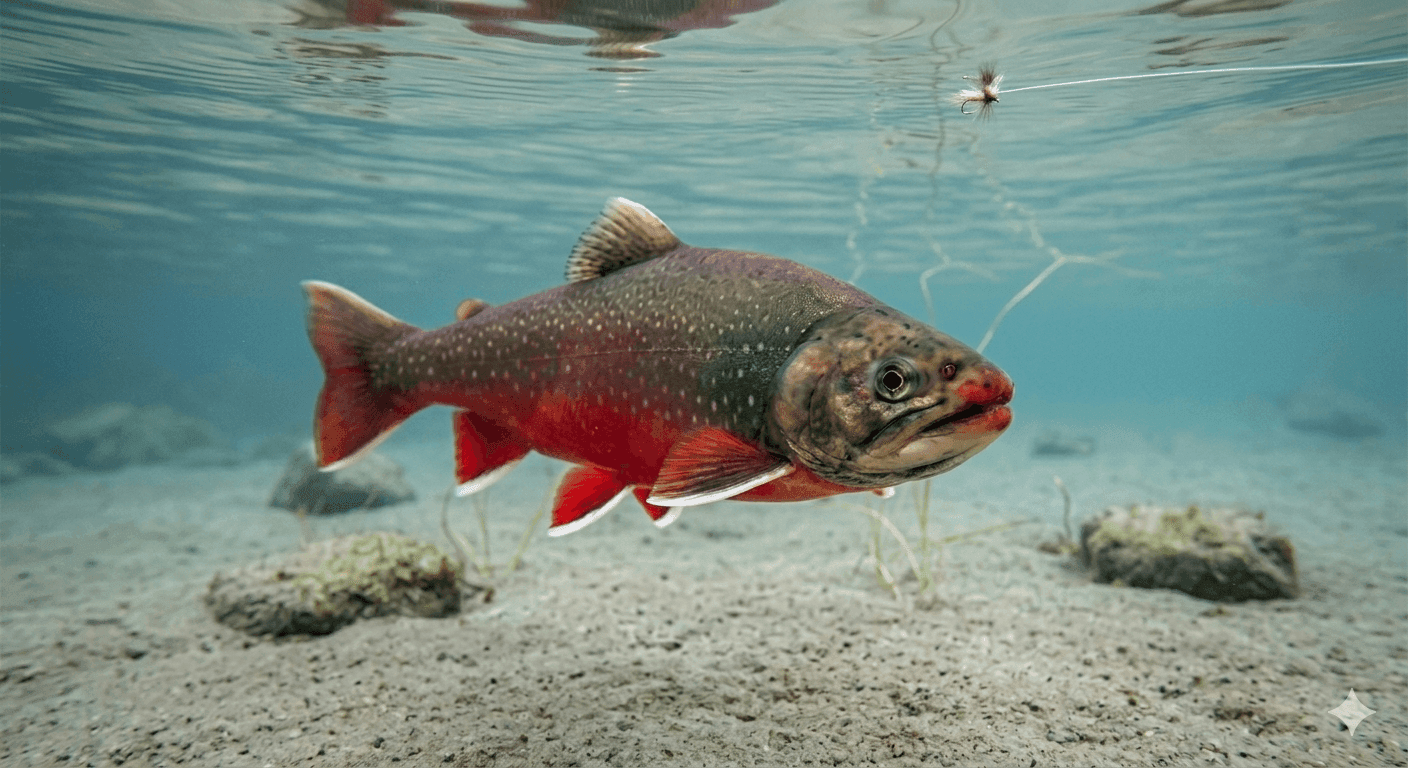
Arctic Char
Salvelinus alpinus
A relic from the last Ice Age — the arctic char inhabits the coldest and deepest lakes of Northern Europe and offers pure wilderness fly fishing.
Deep, ultra-cold, oligotrophic mountain lakes and short cold rivers. Requires exceptionally clean, cold water.
20–50 cm, typically 150–600 g in most lake populations; migratory char can reach 2–3 kg.
Salvelinus alpinus
Scotland, Scandinavia, Iceland, Alps. Most populations are isolated relics from the last glaciation.
The arctic char occupies the coldest, most pristine water environments in Europe — often alongside the glacially carved landscapes that shaped them 10,000 years ago. Fishing for char is inherently a wilderness experience.
Char are visually extraordinary: the spawning male turns a flaming orange-red beneath the lateral line with snow-white-edged fins.
Fly fishing tactics
Lake Fishing from a Boat
On deep glacial lochs, row or drift slowly at first light and last light when char move into shallow margins to feed. The approach must be silent — char are acutely sensitive to boat noise.
River Fishing in Iceland
Iceland's char rivers offer a unique combination of high-density, free-rising fish and spectacular volcanic landscape.
Recommended flies
Best months
Other species
Asp
Leuciscus aspiusA fast, aggressive surface predator unique to European rivers — asp fly fishing combines the excitement of sight fishing with explosive surface takes.
Atlantic Salmon
Salmo salarThe king of rivers — a powerful anadromous fish that returns from the ocean to spawn in its birth river.
Barbel
Barbus barbusA powerful bottom-feeding river specialist whose strength in fast current makes it one of Europe's most underrated fly-rod fish.
Brown Trout
Salmo truttaThe most iconic freshwater fish in European fly fishing — wary, selective, and endlessly fascinating.
Carp
Cyprinus carpioThe most exacting warm-water sight-fishing challenge in Europe: shallow-water carp reward stealth, accurate casting, and nerve.