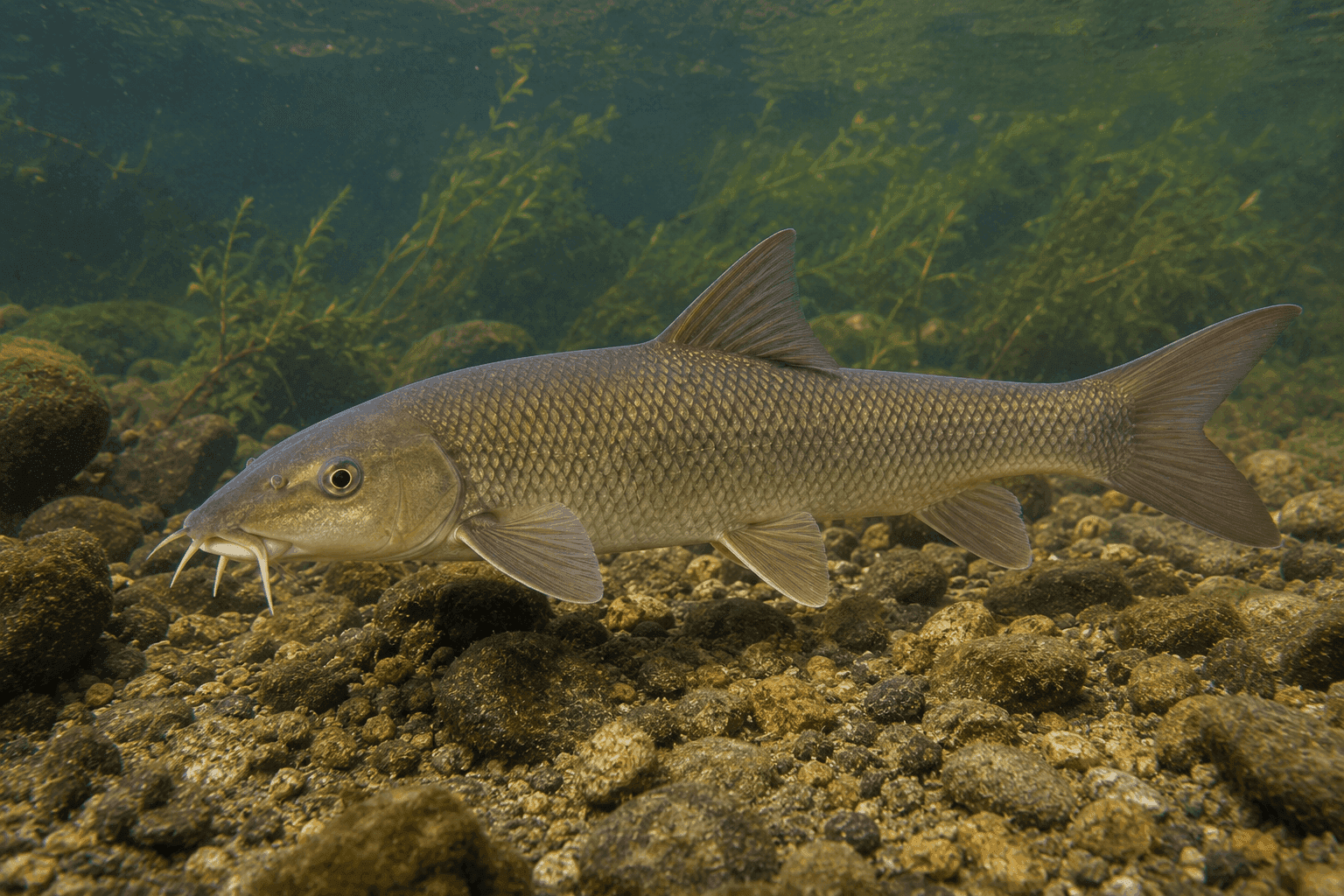
Barbel
Barbus barbus
A powerful bottom-feeding river specialist whose strength in fast current makes it one of Europe's most underrated fly-rod fish.
Medium to large rivers with steady current, gravel runs, weed beds, and deep glides. Prefers warm, well-oxygenated lowland rivers.
35–80 cm, typically 1.5–5 kg; specimen fish in major rivers can exceed 8 kg.
Barbus barbus
Native across much of Western and Central Europe, including England, France, Low Countries, Germany, Poland, Czech Republic, and Danube basin.
Barbel are rarely the first species that comes to mind in European fly fishing, but they should be. In clear summer rivers, large barbel patrol gravel shallows and weed-fringed runs with the same visual drama that makes carp fishing compelling.
The species is strongly associated with mature lowland rivers where current, gravel, and abundant benthic food meet.
Fly fishing tactics
Heavy Nymphing Upstream
The most reliable barbel method is a direct upstream or up-and-across presentation with a weighted nymph, shrimp, or worm-style fly.
Sight Fishing on Gravel Glides
When water is clear, watch for barbel tailing, rolling, or moving in loose groups over shallow gravel.
Recommended flies
Best months
Other species
Arctic Char
Salvelinus alpinusA relic from the last Ice Age — the arctic char inhabits the coldest and deepest lakes of Northern Europe and offers pure wilderness fly fishing.
Asp
Leuciscus aspiusA fast, aggressive surface predator unique to European rivers — asp fly fishing combines the excitement of sight fishing with explosive surface takes.
Atlantic Salmon
Salmo salarThe king of rivers — a powerful anadromous fish that returns from the ocean to spawn in its birth river.
Brown Trout
Salmo truttaThe most iconic freshwater fish in European fly fishing — wary, selective, and endlessly fascinating.
Carp
Cyprinus carpioThe most exacting warm-water sight-fishing challenge in Europe: shallow-water carp reward stealth, accurate casting, and nerve.